30th Astronomy Retreat, 7–10 Jun: Celebrating three decades of stargazing
The Institute of Physics, Singapore (IPS) held its 30th Astronomy Retreat from 7 to 10 June 2026. The annual event brought together astronomy enthusiasts across generations—from secondary students to veteran hobbyists. Weather permitting, stargazing would begin at the crack of each evening and run through the night, while the day’s programme would boast a curated lineup of talks and workshops.
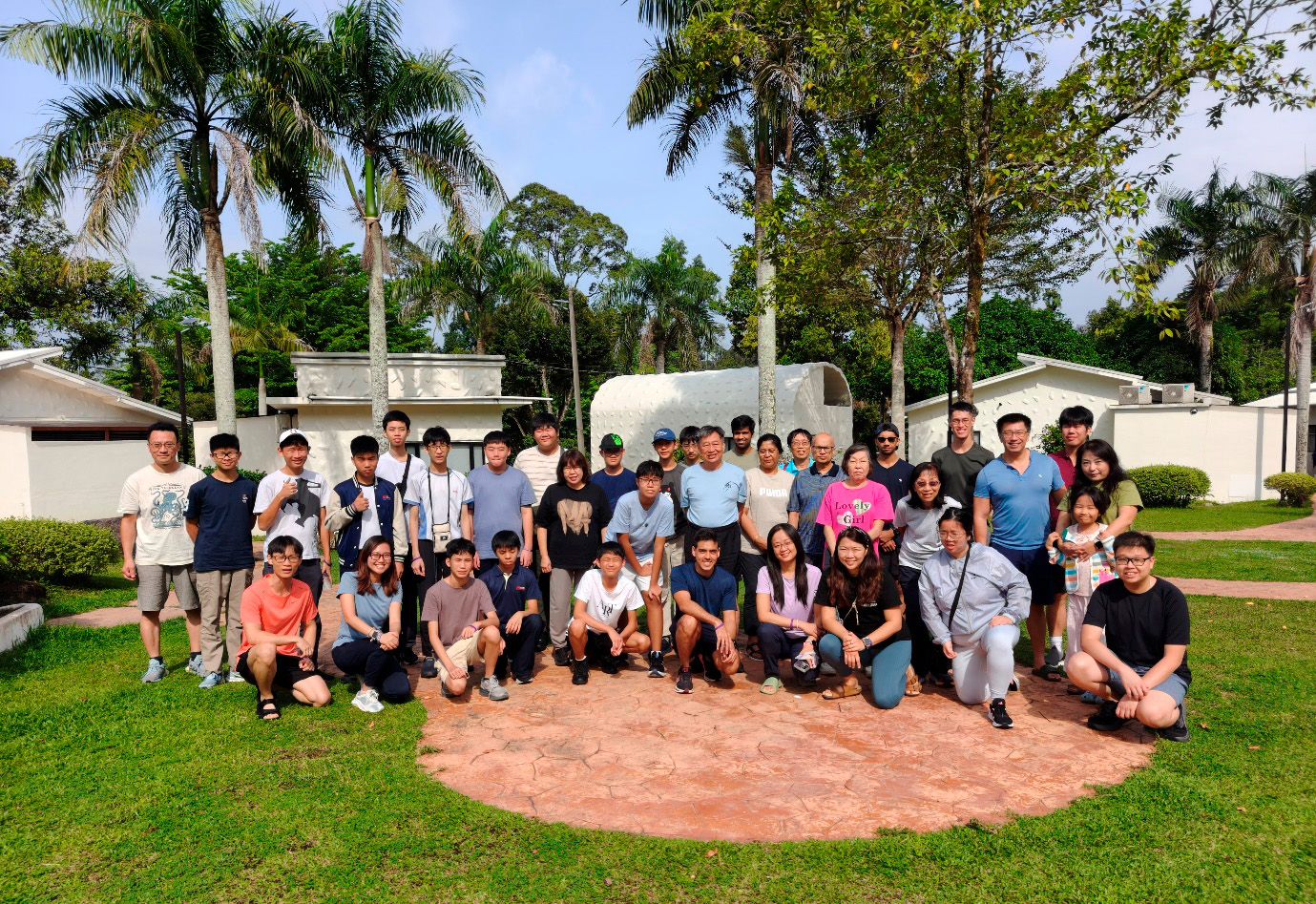
This year, the event was held at the Beacon Resort in Selangor, Malaysia, a dark sky haven surrounded by tropical rainforest. Enduring an eight-hour bus journey, the 42 participants would meet skies at least two times darker than the harsh urban settings of Singapore.
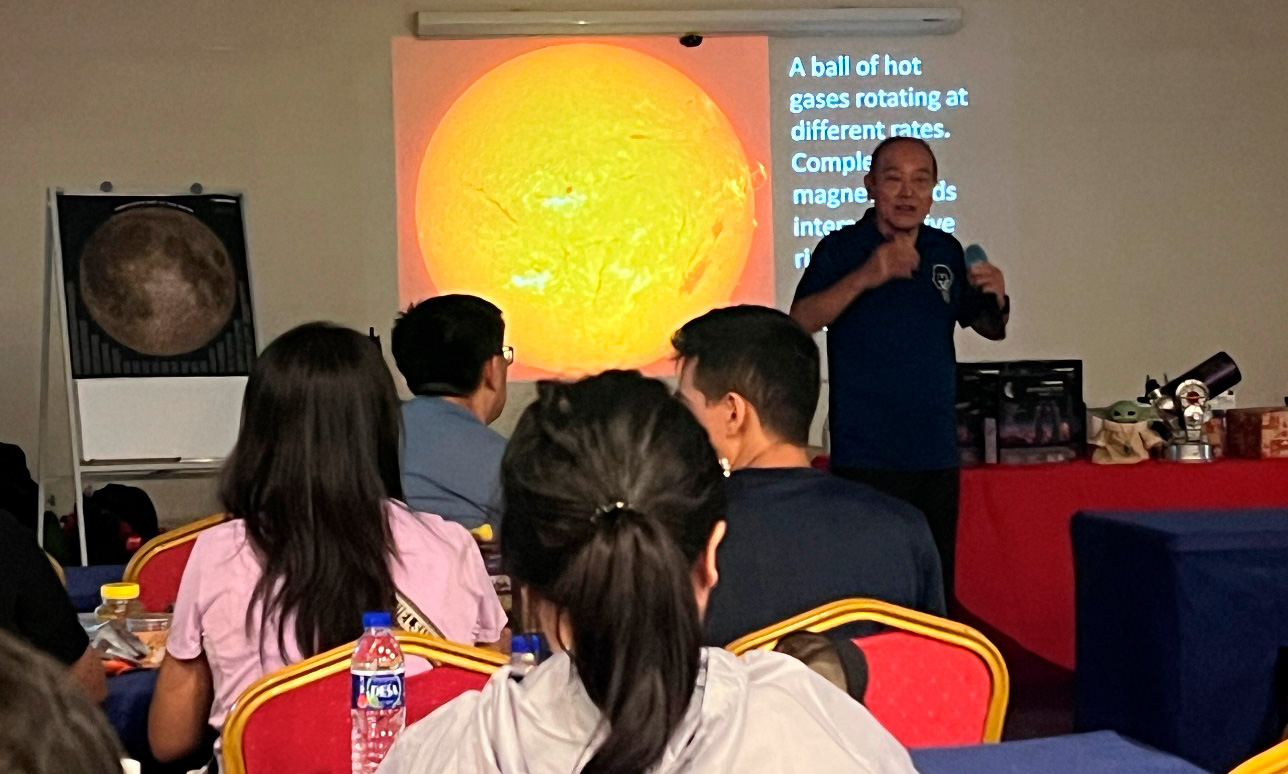
Mr Alfred Tan shared passionately about solar imaging, highlighting features of our star that should not be overlooked.
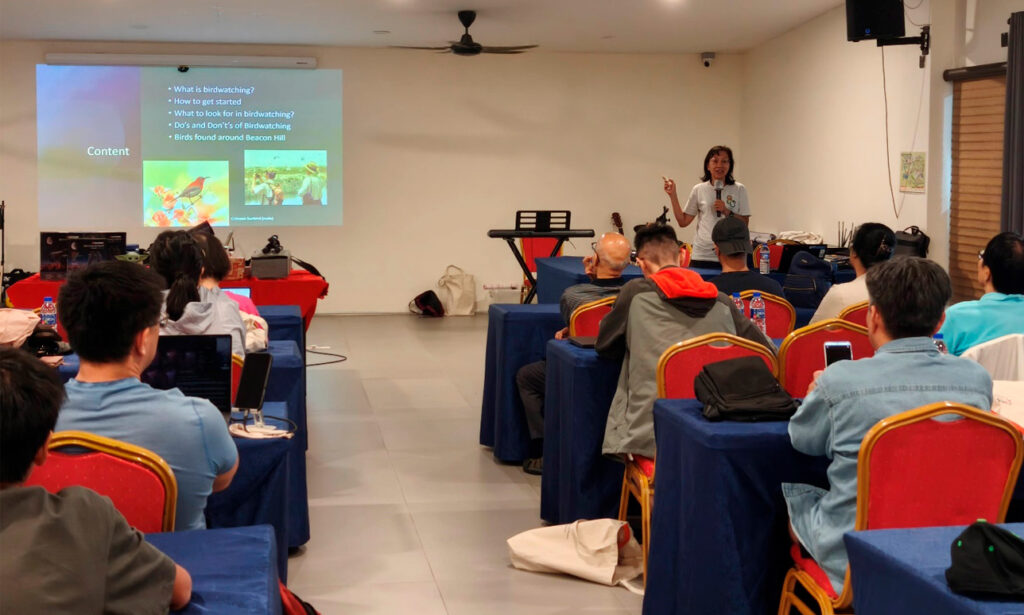
Dr Lee Lay Tin gave an introduction on birdwatching, a hobby she enjoys outside of her regular work as a physician.
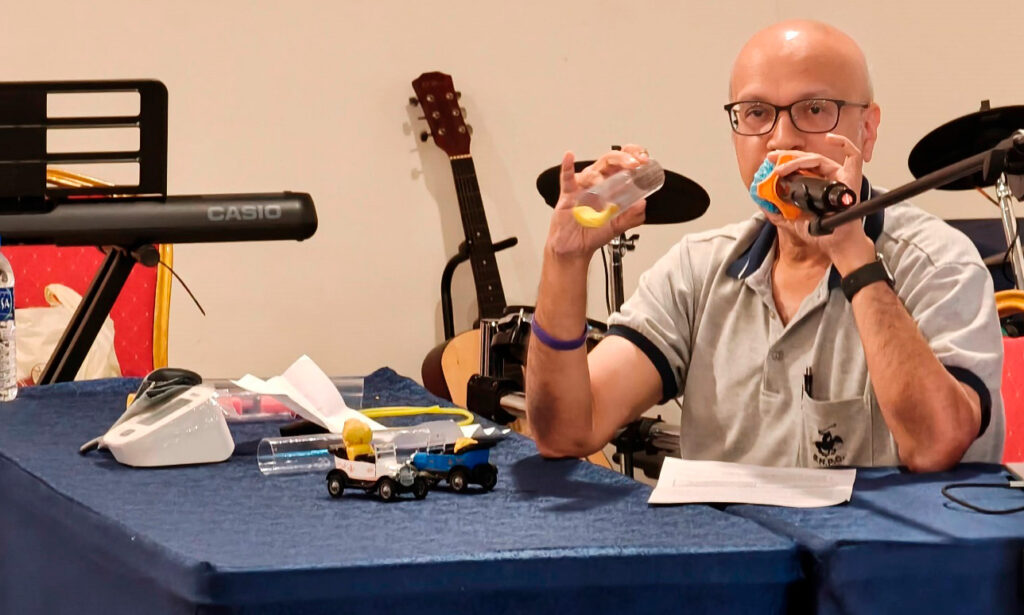
Sharing his expertise, Dr Abdul Malik dispelled misconceptions about cholesterol in his talk about arterial health.
“Each year, we see new faces, old faces,” shared Associate Professor Phil Chan Aik Hui from NUS Physics, a long-standing organiser for the annual event. With its three-decade legacy, the programme has established itself in the local astronomy scene and attracts participants from all walks of life. Some participants also return as speakers of talks or as donors of prizes, choosing to give back to the community and encourage the pursuit of the shared passion of astronomy.
Mr Remus Chua, an experienced astrophotographer, advocated for the psychological benefits of the challenges faced in astrophotography, amidst technological advancements that simplify the process.
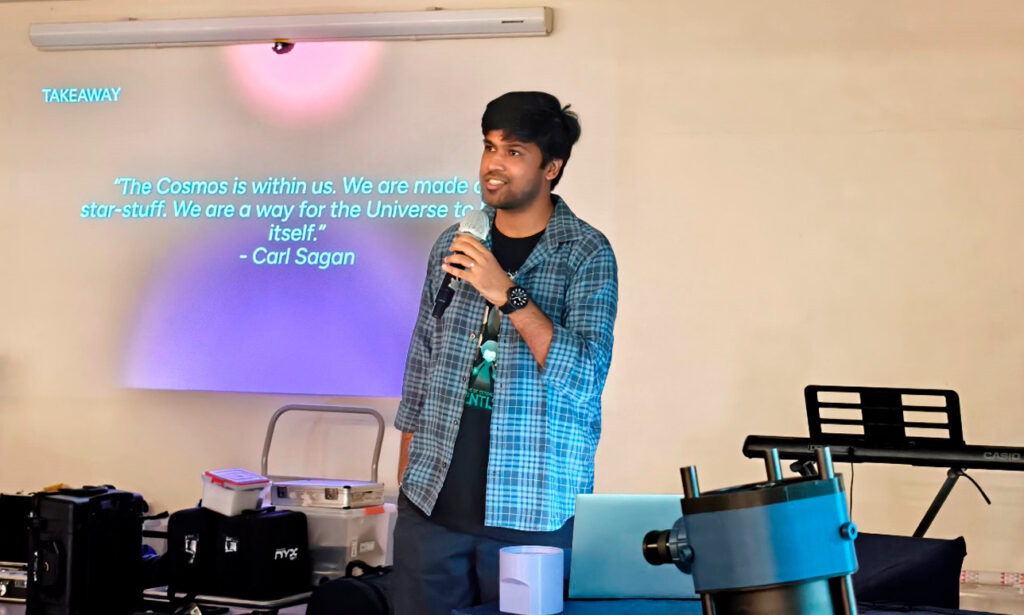
Dr Pulkit Agarwal from NUS Physics conducted an inspiring lecture about the history of the universe and humanity.
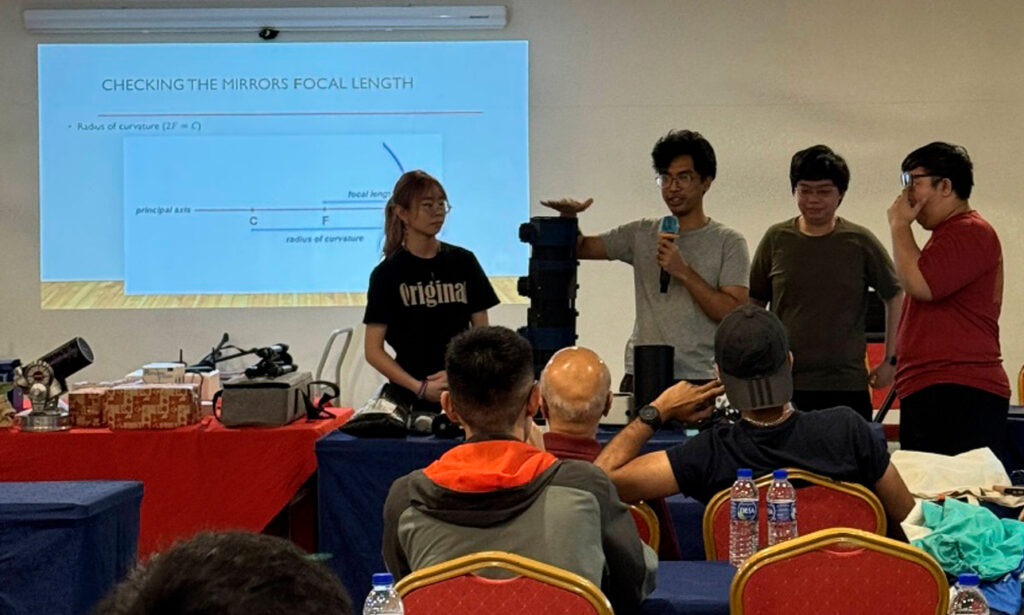
Undergraduates from NUS Astronomy Society conducted an engaging telescope building workshop.
The IPS Astronomy Retreat also stands as a treasured learning experience for numerous student groups through its yearly iterations. For NUS Computer Engineering undergraduate, Mr Thi Han Soe Zaw, his interest in astronomy has not ceased since his secondary school days. Now attending in the capacity of a student helper with the NUS Astronomy Society, he recalled fondly, “my first stargazing trip was with IPS in 2019, when I was a Secondary 2 student”. The daytime programme brought refreshing insights across astronomy and physics topics, with some sessions also covering other domains in science and nature, like health and wildlife. With participants hailing from different backgrounds, intriguing prospectives were shared and invigorating conversations continued well into meal breaks and the evenings.
All smiles as participants from the School of Science and Technology (SST) tinkered with the telescope they had assembled.
Mr Tan Jyh Harng from NUS Physics demonstrated mobile photography tips.
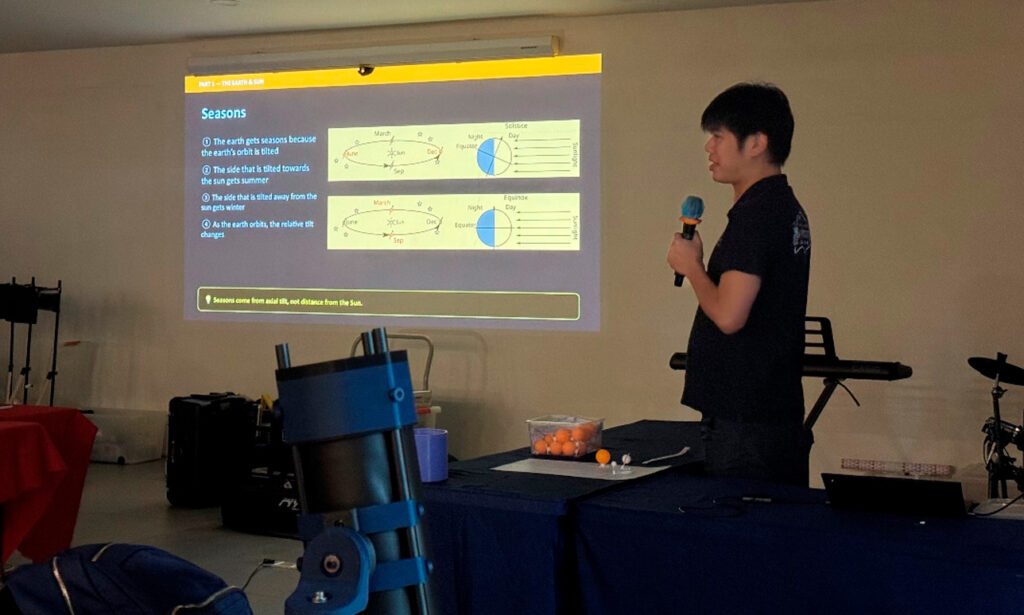
Dr Abel Yang from NUS Physics explained how movements of sky objects gave rise to different calendar systems.
On the stargazing front, clear skies persisted for several hours on the first night, offering a decent window to view the summer triangle and the rising of the Milky Way, among other prominent asterisms like the Big Dipper and Southern Cross.
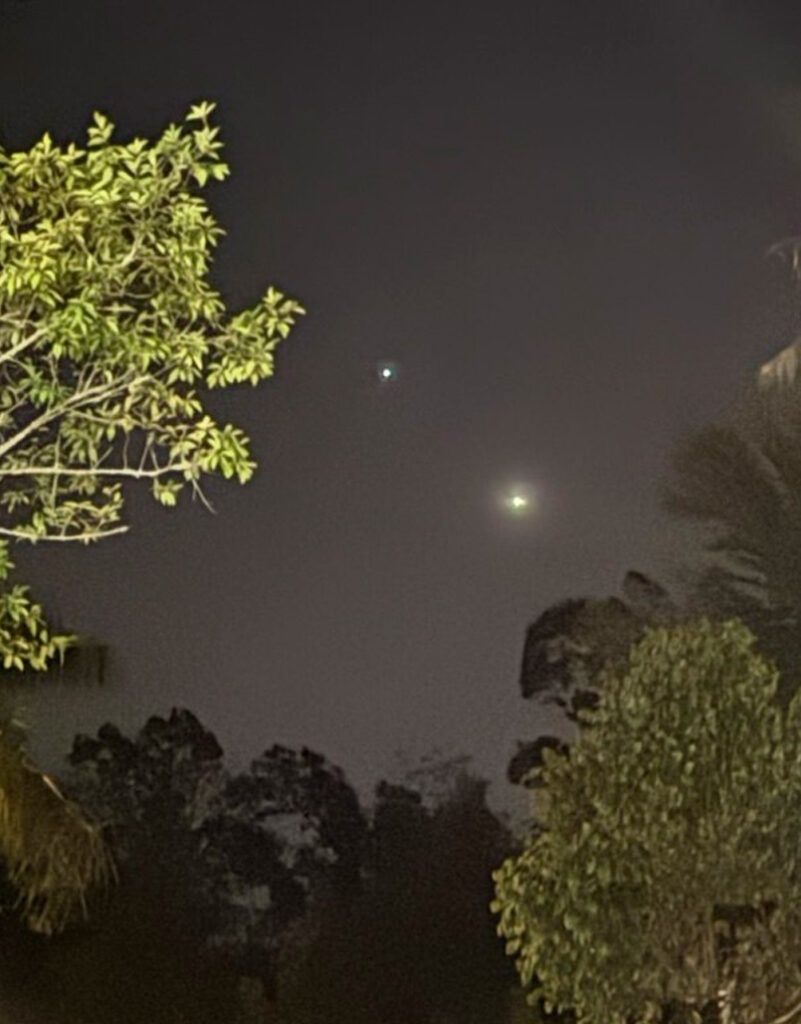
Coincidentally, a close approach between Venus and Jupiter would have been observable on the last evening of the trip. However, after making their appearance on the first evening, cloudy conditions switched in for the rest of the trip, marring even the radiant shine of the two brightest planets in the sky. True to its equatorial climate, rainy conditions that had been forecasted for all three nights at the site did come to pass.
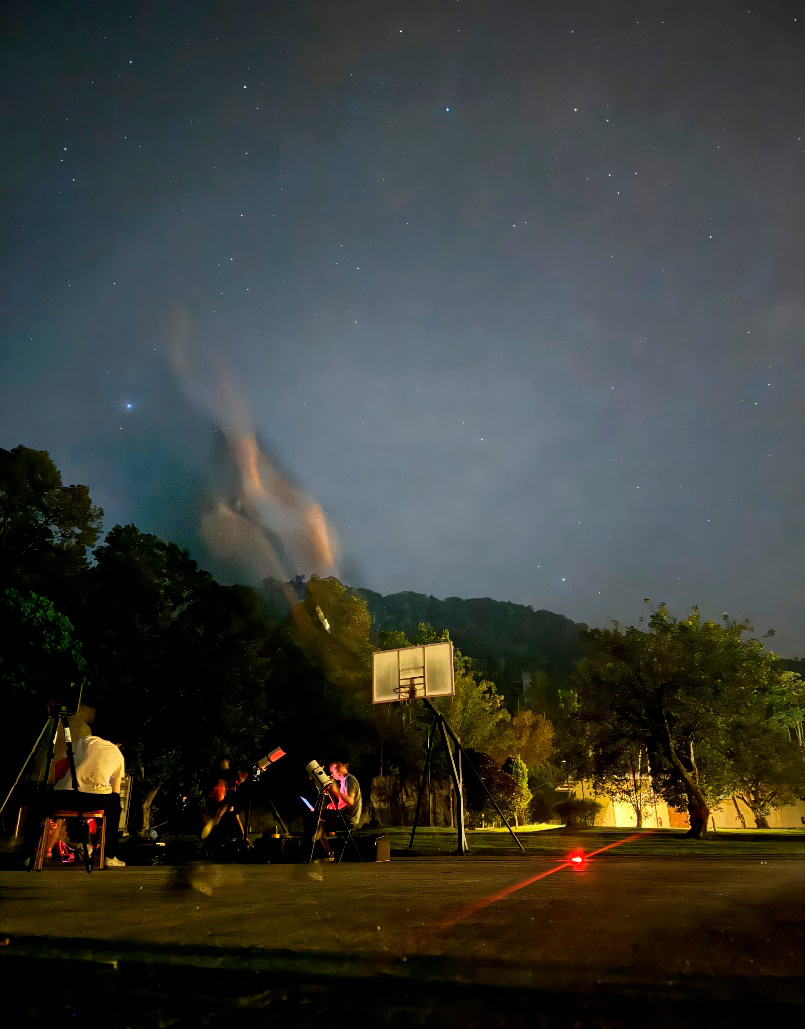
The basketball court was transformed into a stargazing base camp, with Milky Way starting points Vega and Altair shining just above the canopy.
Jupiter and Venus on the evening of 7 June, two nights before their closest approach.
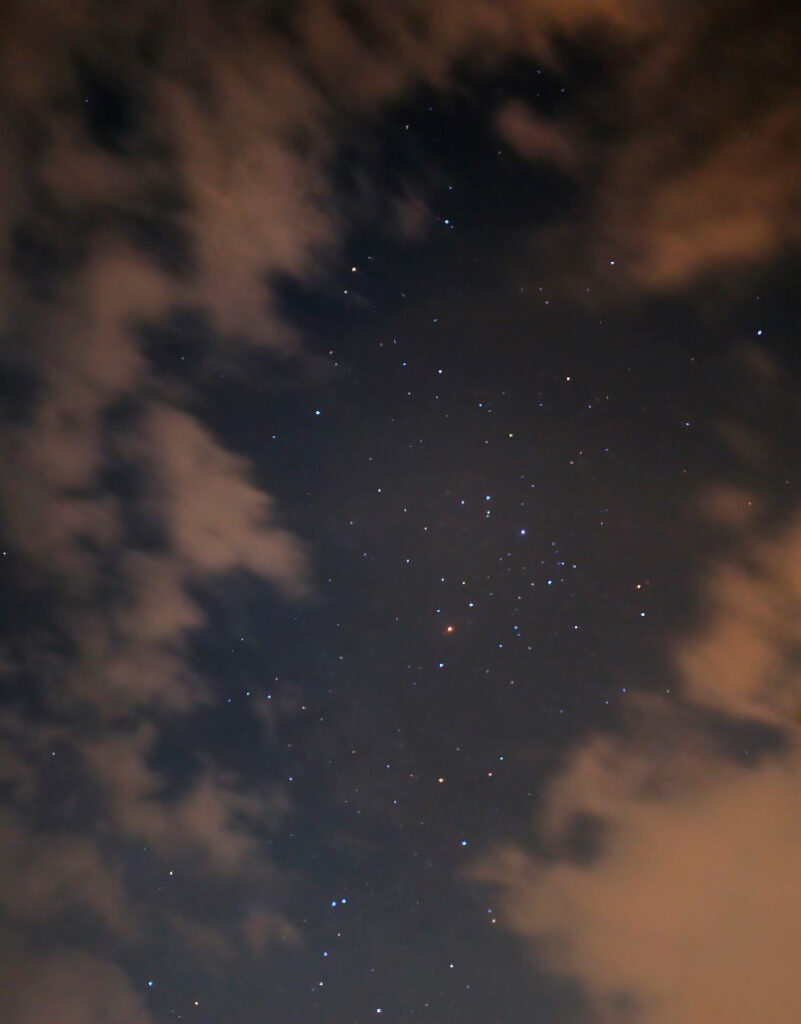
The constellation of Scorpius briefly revealed itself between a small break in the clouds at midnight, despite a thunderstorm in the evening.
Thick clouds and sporadic showers did not, however, dampen the spirits of the astronomers. Despite the unpredictable weather conditions, several participants remained on standby through the cloudy nights in the hope of the weather clearing up.
At dawn on the last day, all equipment was packed for the journey home. It was yet another night shrouded by clouds with the waning crescent moon the sole bearer of light when it finally rose. Nonetheless, as the group left the resort after sunrise, a feeling of inspiration and hope lingered. While some have targets set for their next scheduled stargazing session, all returned with a pleasant memory of time spent among fireflies and darker skies, away from the city buzz.