
My academic journey at NUS
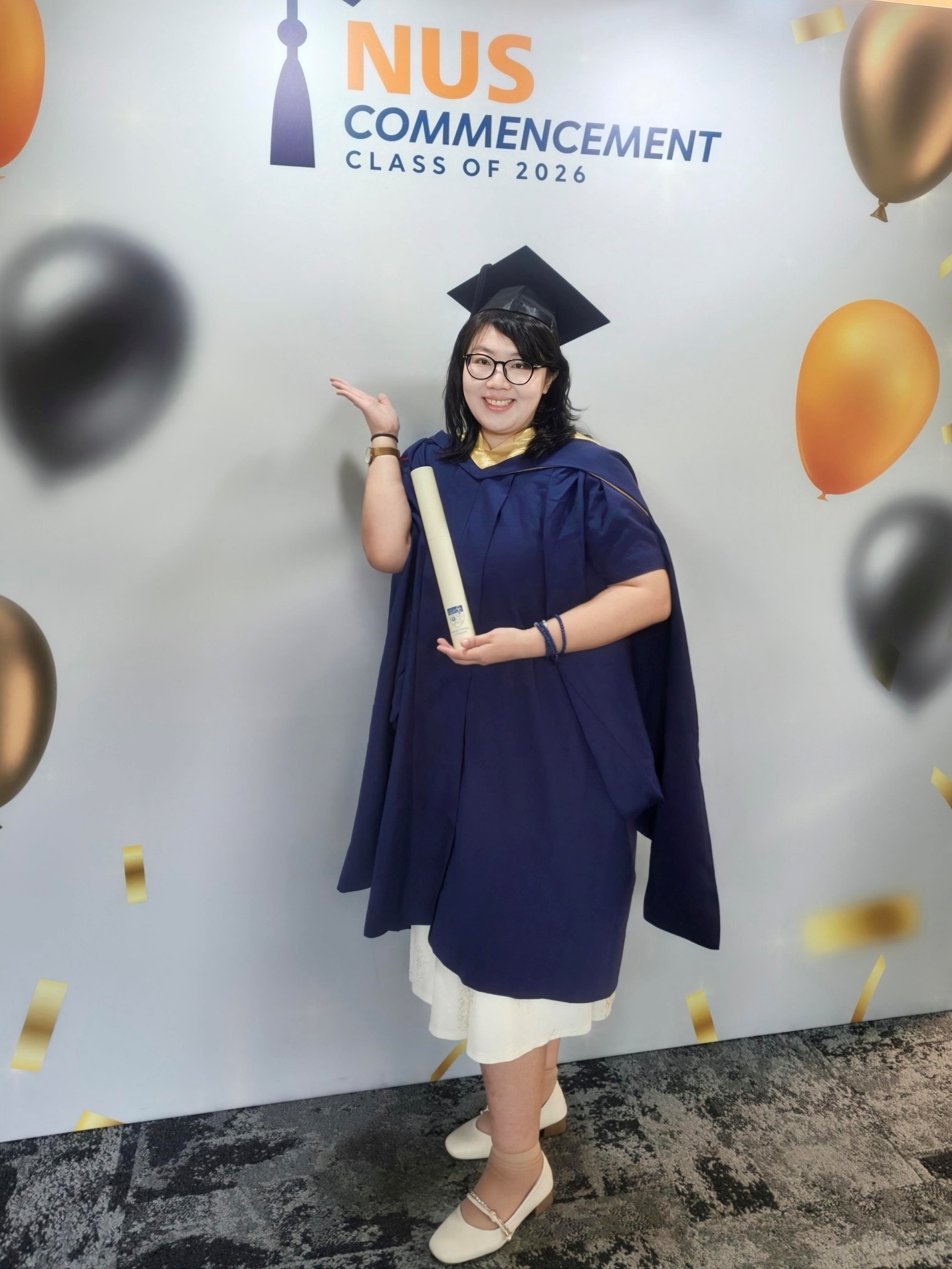
Ta Na [MSc 2026]
Hello everyone! My name is Ta Na, and I am from Inner Mongolia, China.
In August 2024, I joined the Master of Science in Physics for Technology (MPT) programme at the National University of Singapore. After graduating in December 2025, I continued my academic journey as a PhD student in the NUS Department of Physics.
Looking back, enrolling in the MPT programme was one of the most important decisions I have ever made. It not only deepened my understanding of physics and technology, but also transformed the way I approach scientific research, innovation, and personal growth. I hope that by sharing my experience, I can offer some inspiration to students who are considering a similar path.
Finding My Direction
My undergraduate training was in condensed matter physics, where I worked on applying physical principles to biosensing and fluorescence detection. Throughout those studies, one question stayed with me: How can physics research be translated into technologies that truly benefit society?
I wanted to pursue an education that combined rigorous physical principles with cutting-edge technological applications. That search eventually led me to the NUS MSc in Physics for Technology programme.
What immediately attracted me was its interdisciplinary curriculum. Alongside core subjects such as condensed matter physics and quantum mechanics, the programme integrates modern topics including machine learning, materials science, and computational physics—providing exactly the bridge I had been looking for between fundamental science and real-world applications.
Equally inspiring was the Department of Physics itself. Its internationally recognised research excellence, world-class laboratories, and collaborative academic environment convinced me that NUS was the ideal place to pursue my aspirations.
Building Knowledge Through Challenge
The MPT curriculum is both rigorous and intellectually rewarding. Every course challenged me to think more deeply and broadened my perspective on physics.
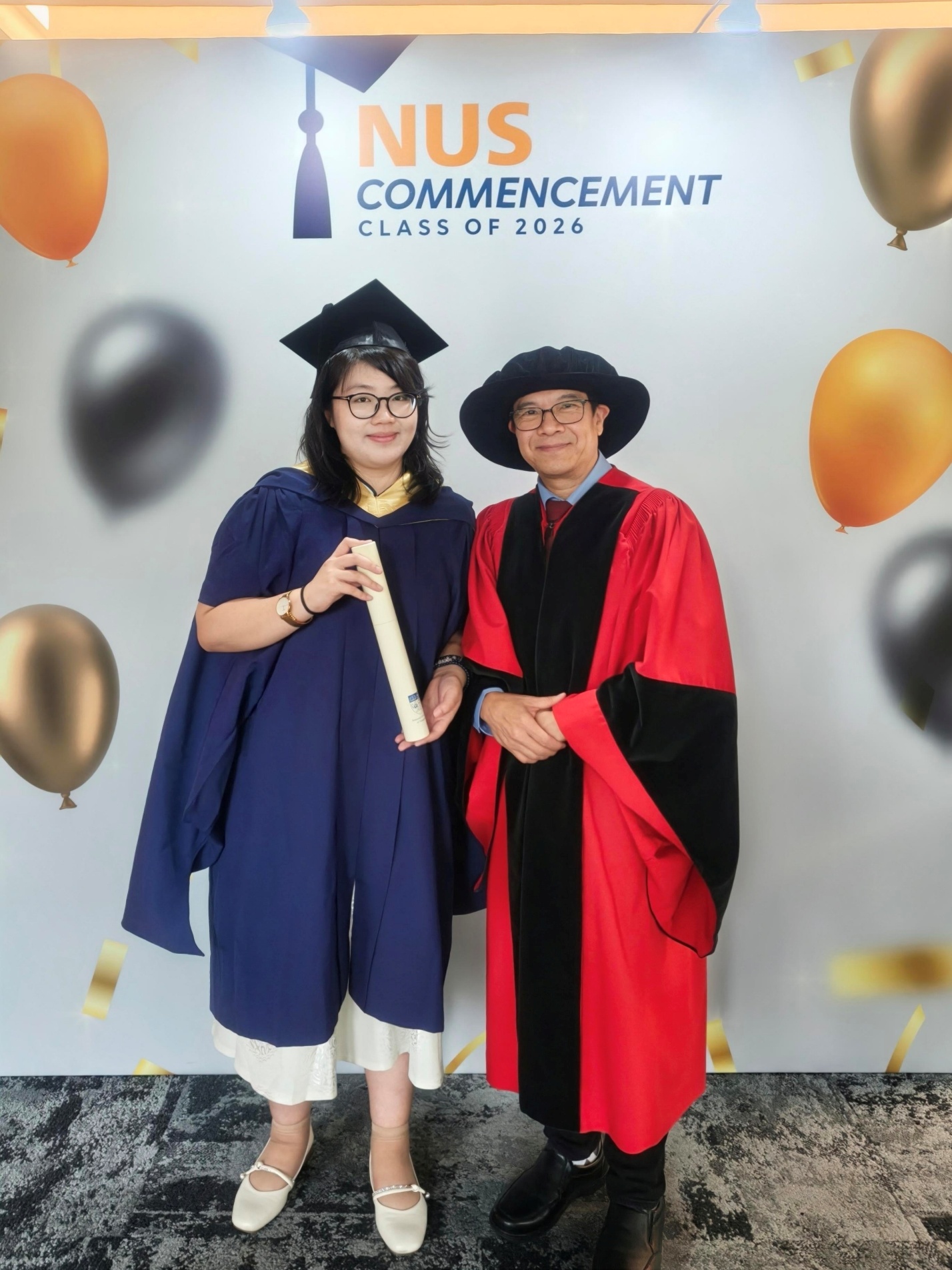
One of the most memorable courses was PC5101 Physics and Technology, taught by Prof Sow Chorng Haur, who later became both my Master’s and PhD supervisor.
Prof Sow possesses a remarkable ability to transform complex scientific concepts into engaging stories. His lectures were always energetic and inspiring. Whether introducing quantum dots, carbon nanotubes, or other emerging nanomaterials, he not only explained the fascinating physics behind these systems but also demonstrated how they could enable future technologies. His teaching seamlessly connected microscopic physical principles with practical engineering applications.
Beyond the classroom, Prof Sow has been an exceptional mentor. He always welcomed discussions about research ideas and career plans with patience, encouragement, and genuine enthusiasm. Some of my favourite memories are our informal conversations over coffee at Starbucks. Those relaxed discussions often sparked new ideas and offered valuable guidance at critical moments in my research journey.
His mentorship taught me that an outstanding supervisor is far more than a source of knowledge—they inspire confidence, encourage curiosity, and help students discover their own potential.
Another course that profoundly influenced me was PC5203 Advanced Solid State Physics, taught by Prof Lee Ching Hua.
The course covered topics ranging from tight-binding models to frontier research on topological materials. What impressed me most was Prof Lee’s commitment to integrating the latest research papers directly into his teaching, allowing students to engage with the newest developments in condensed matter physics.
I vividly remember struggling to understand a particularly challenging concept in non-Hermitian physics. Despite reading numerous papers, I still felt confused. After class, I approached Prof Lee with my questions. He spent nearly half an hour patiently drawing intuitive physical pictures on the whiteboard until everything finally clicked. That experience reminded me that at NUS, professors genuinely welcome difficult questions and are deeply invested in helping students learn.
Beyond the Classroom
One of the greatest strengths of the MPT programme is the opportunity to participate in cutting-edge research.
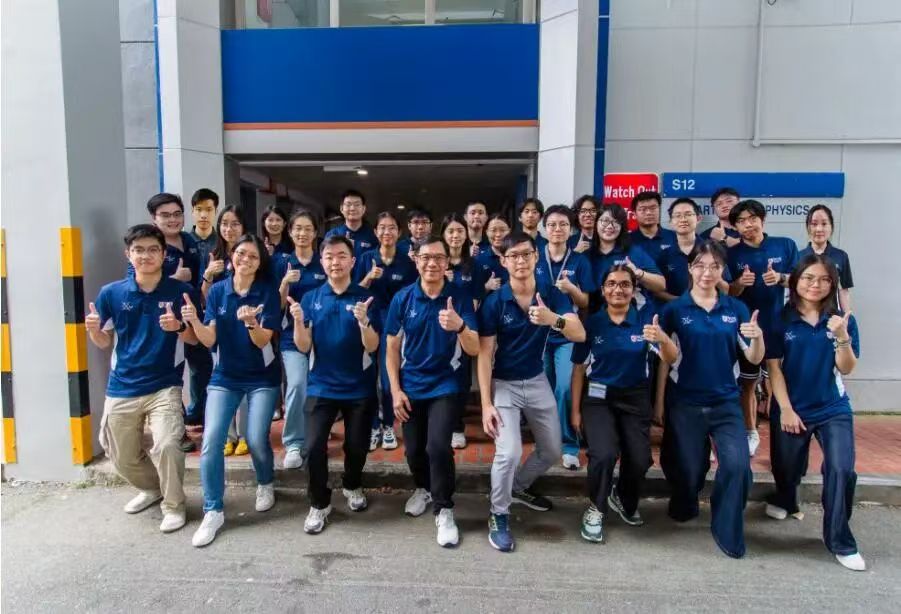
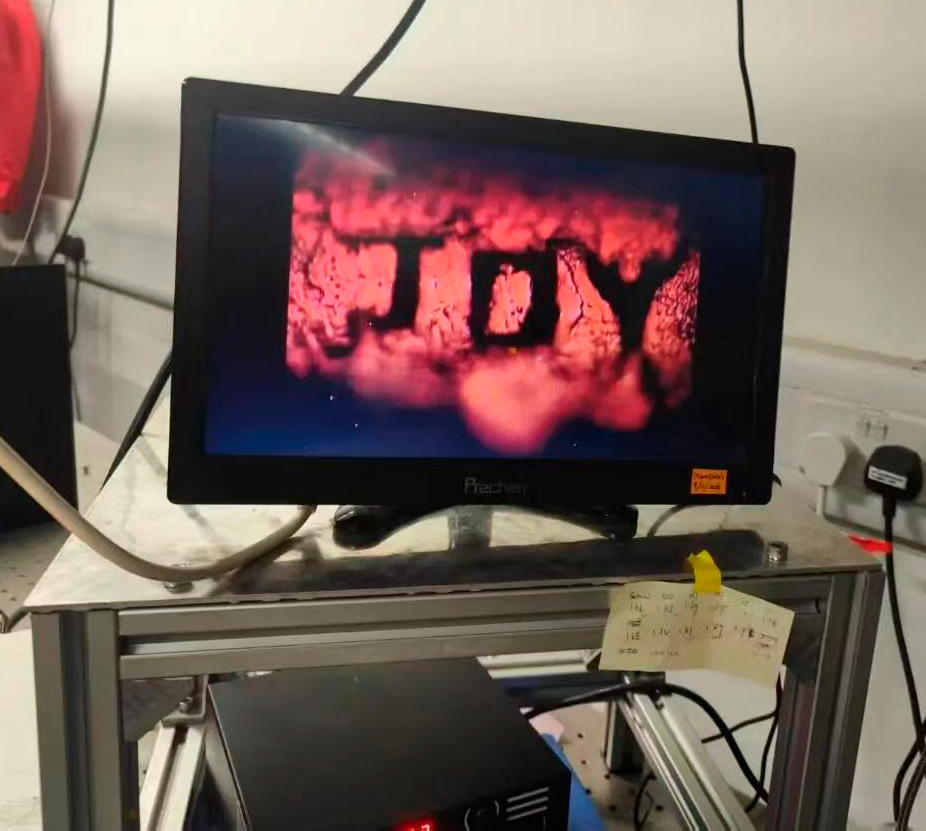
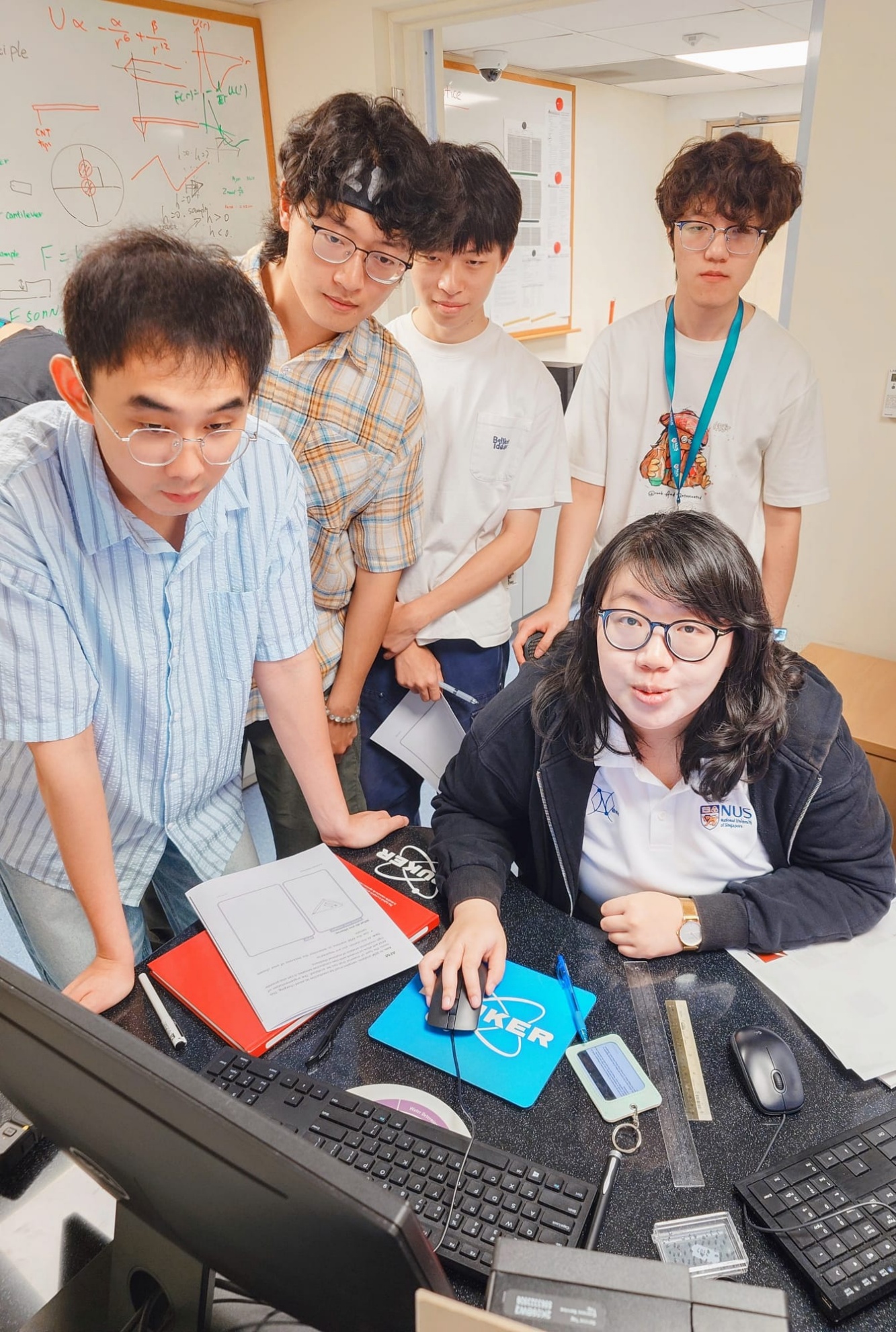
I was fortunate to join Prof Sow’s research group for my Master’s thesis. The laboratory offered access to state-of-the-art fabrication and characterisation facilities, while senior group members generously shared their experience and guidance.
From conducting literature reviews and designing experiments to operating sophisticated instruments independently, analysing data, and presenting research clearly and logically, every stage strengthened both my technical abilities and my confidence as a researcher.
Prof Sow often reminded us: “Good applied research begins with a deep understanding of fundamental physics.”
This philosophy has stayed with me throughout my research journey. It reminds me to remain firmly grounded in physical principles while constantly exploring their technological applications.
Our research group also regularly participates in outreach and demonstration activities, welcoming students of all ages from around the world to experience the beauty of physics. Watching young visitors suddenly understand a scientific concept and seeing the excitement on their faces has been one of the most rewarding parts of my time at NUS. Those moments reminded me that sharing knowledge can be just as meaningful as discovering it.
Growing as a Global Citizen
Life at NUS extends far beyond lectures and laboratories.
The university provides a welcoming and supportive community where students from diverse cultural backgrounds celebrate major festivals together, helping international students feel at home even when they are far from their families.
My classmates came from China, India, Germany, Southeast Asia, and many other parts of the world. We exchanged not only academic ideas but also cultural perspectives and life experiences. These interactions broadened my worldview and helped me develop lasting international friendships.
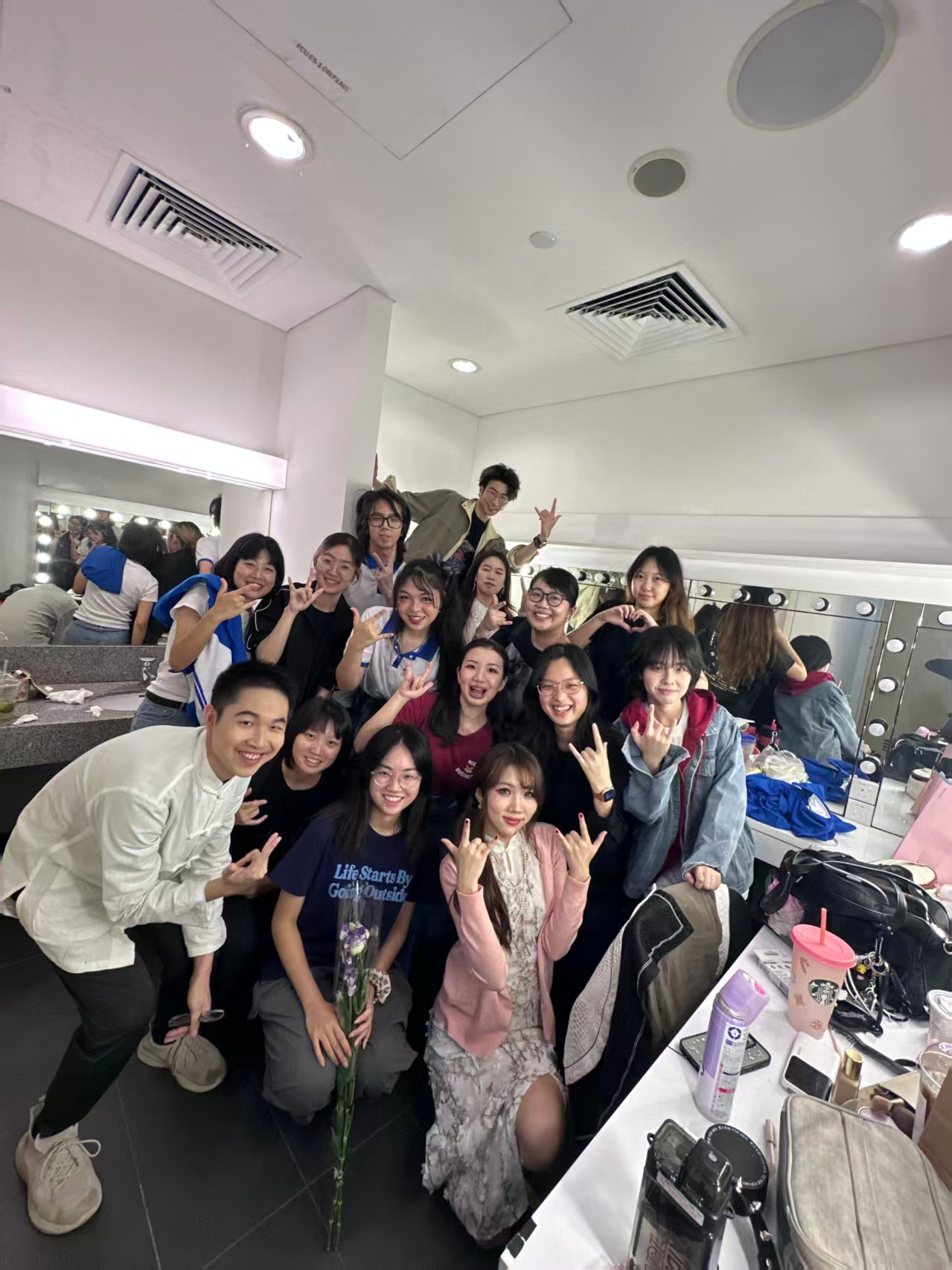
NUS also encourages students to maintain a healthy balance between research and personal interests. Although I am a physics student, I have also been actively involved in NUS Musical Theatre, where I have been able to pursue my passion for performing arts while continuing my research. This experience has shown me that scientific excellence and personal growth can flourish together.
Watching young visitors suddenly understand a scientific concept and seeing the excitement on their faces has been one of the most rewarding parts of my time at NUS. Those moments reminded me that sharing knowledge can be just as meaningful as discovering it.
Ta Na
To Future MPT Students
Looking back, I would like to share three pieces of advice for anyone considering the programme:
Embrace interdisciplinary learning
If you are curious about how physics can shape the future of technology, the MPT programme provides both a strong foundation in fundamental physics and the practical skills needed to transform ideas into real-world innovations.
Be proactive
Take the initiative to speak with professors, participate in research projects, and build friendships with students from different backgrounds. NUS offers tremendous opportunities—but they are best discovered by those who actively seek them.
Know your goals, but remain open to new possibilities
Whether you aspire to pursue a PhD, join the high-tech industry, or contribute to education and research, the MPT programme provides an excellent foundation. At the same time, allow yourself the flexibility to explore new interests and refine your ambitions along the way.
One song lyric from renowned Italian tenor Andrea Bocelli’s Nelle Tue Mani has always resonated with me:
Non arrenderti mai
Dipenderà soltanto da te
Soltanto da te
For me, studying in the MPT programme has been a journey of transformation. I entered as a student eager to learn more about physics; I leave with the confidence to apply physical thinking to solve complex technological problems and with the privilege of continuing that journey through my PhD research.
If you are looking for a programme that combines the depth of physics with the breadth of modern technology, I sincerely encourage you to consider the NUS MSc in Physics for Technology programme. It will challenge you, inspire you, and perhaps, as it did for me, open doors to opportunities you never imagined possible.