
SEMINAR 2025
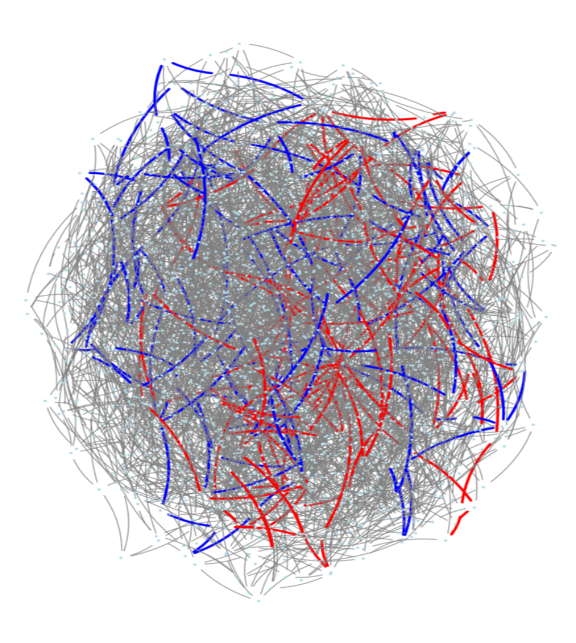
Evolutionary random graph networks and quantum gravity
| Speaker | Medeu Abishev, Al Farabi Kazakh National University, Almaty, Kazakhstan |
| Date/Time | Monday, 3 Nov, 3pm |
| Location | S11-02-07 Conference Room |
| Host | Asst/Prof Alvin Chua |
Abstract
In this work, we study the dynamics of evolutionary random graphs constructed iteratively from an initial closed structure via probabilistic identification of points on edges for unification, depending on the distance between those edges. The evolution is governed by an infinite-dimensional probability parameter that depends on the geometric and temporal characteristics of the current graph state, such as edge-to-edge distances and restriction for unification per cycle. The focus is on analyzing the asymptotic behavior of such graphs in the limit of many iterations, including degree distributions, connectivity fluctuations, the emergence of critical regimes, and fractal dimensionality.
It is shown that under certain probabilistic control regimes, the model exhibits behavior analogous to that found in discrete approaches to quantum gravity. We discuss the conditions under which the graphs transition into regimes supporting particles and fields on quasi-continuous and cotinious geometries, including possible phase transitions similar to spacetime condensates in Group Field Theory (GFT) and other approaches.
The results can be interpreted as a step toward constructing a probabilistic-geometric model for the emergence of spacetime from discrete dynamical processes and chronostructure. The proposed approach bridges methods from random graph theory, statistical physics, and quantum gravity models within a unified constructive paradigm.
Biography
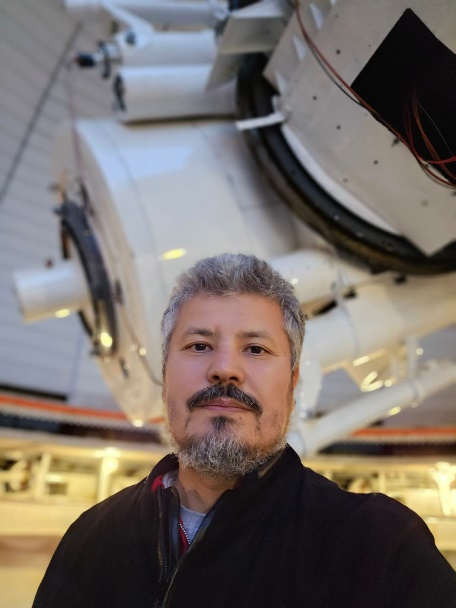
Medeu Abishev is a Kazakhstani scientist in theoretical physics and in relativistic and nuclear astrophysics; Doctor of Physical and Mathematical Sciences, Professor, Academician of the National Academy of Sciences of the Republic of Kazakhstan. His main research areas include general relativity, relativistic astrophysics, dynamics of complex systems, nuclear astrophysics, nonlinear electrodynamics, and numerical relativity.
He resolved the uniqueness problem for the equations of translational and rotational motion of extended bodies derived by Fock’s method in general relativity, and proposed some astrophysical effects of vacuum nonlinear electrodynamics.