
SEMINAR 2025
Searching for ultraheavy dark matter using mechanical sensors
| Speaker | Qin Juehang, Rice University, USA |
| Date/Time | Friday, 18 Jul, 11am |
| Location | S11-02-07 Conference room |
| Host | A/Prof Phil Chan |
Abstract
Planck-scale dark matter candidates are theoretically compelling, yet searching for them poses significant experimental challenges. In this talk, I will present a framework for detecting ultraheavy dark matter using mechanical sensor arrays. These particles would produce characteristic tracks in sensor arrays, which we can identify using statistical track-finding techniques. I will discuss our analysis of various sensor technologies and show sensitivity projections for dark matter coupling to the Standard Model via long-range forces. While detection through purely gravitational couplings has been proposed, we show that such an effort would likely be unfeasible with foreseeable technology due to the required array size and quantum noise reduction. I will, however, demonstrate that a substantial parameter space remains accessible to near-term experimental platforms. This opens new avenues for dark matter searches in a previously inaccessible mass regime and establishes the groundwork for future ultraheavy dark matter detection programmes.

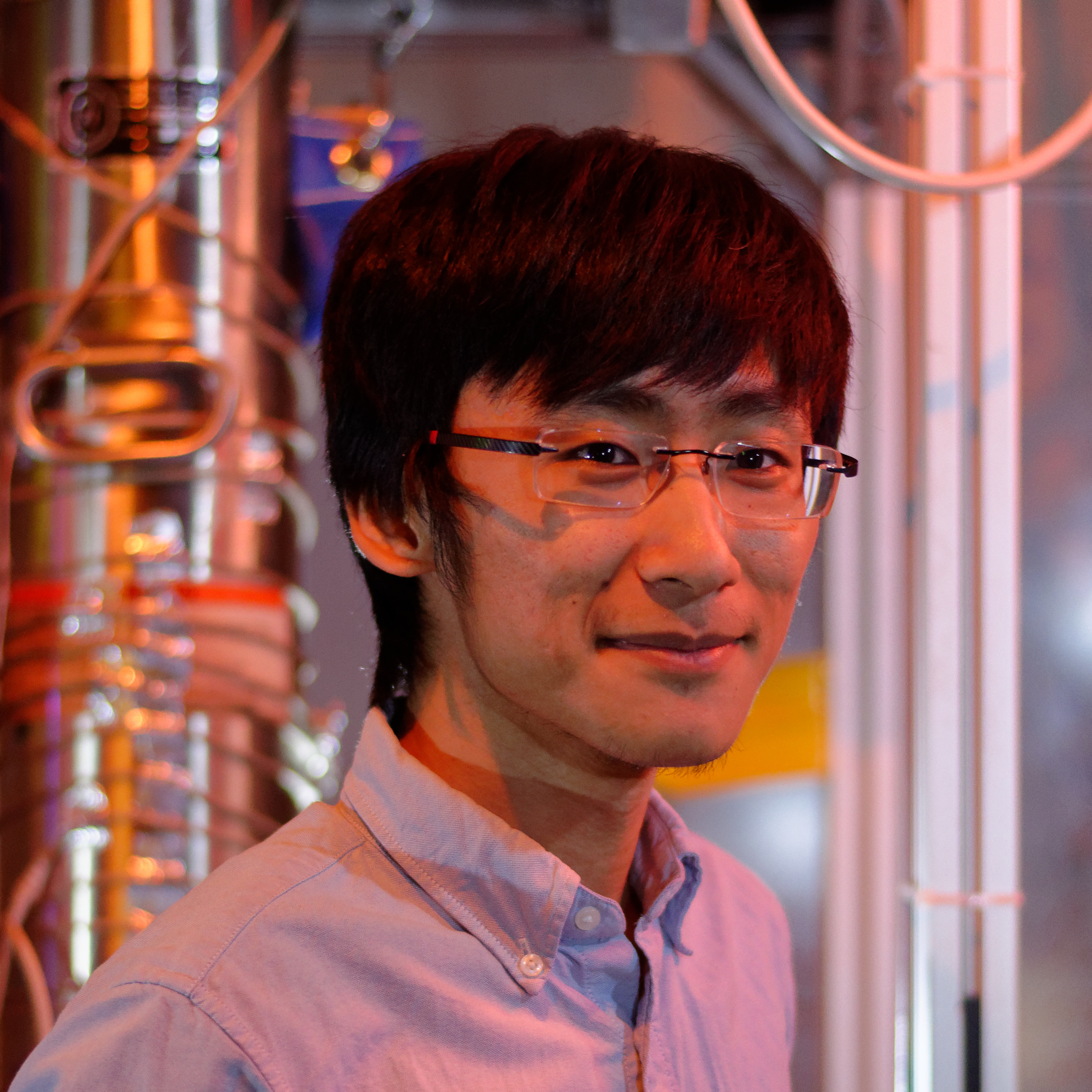
Biography
Dr Qin Juehang is a Postdoctoral Associate at Rice University, where he works with the XENON collaboration on dark matter detection and neutrino physics and collaborates with quantum sensing groups to develop novel detection methods for ultraheavy dark matter. He received his PhD in Physics from Purdue University in 2023, where his thesis focused on computational techniques for direct dark matter detection and neutron calibrations for XENONnT.
During his PhD, Dr Qin received the George W. Tautfest Award for outstanding graduate students in high energy physics and the Charlotte Ida Litman Tubis Award for science communication. He is currently serving as Signals and Detector Team Leader for the XENON Collaboration, and oversees the collaboration’s signal processing and detector response modelling efforts.
Dr Qin’s research combines advanced computational methods with experimental astroparticle physics to search for dark matter and study neutrino properties, with the ultimate goal of searching for physics beyond the standard model. Working at the intersection of computation and experiment, he develops machine learning techniques and analysis frameworks for both traditional and quantum-enhanced particle detectors, enabling new approaches to rare-event searches.