
SEMINAR 2025
Mapping the Early Processes of Star Formation with ALMA
| Speaker | Lee Chin-Fei, Academia Sinica Institute of Astronomy and Astrophysics |
| Date/Time | Wednesday, 23 Jul, 3pm |
| Location | S11-02-07 Conference room |
| Host | Dr Abel Yang |
Abstract
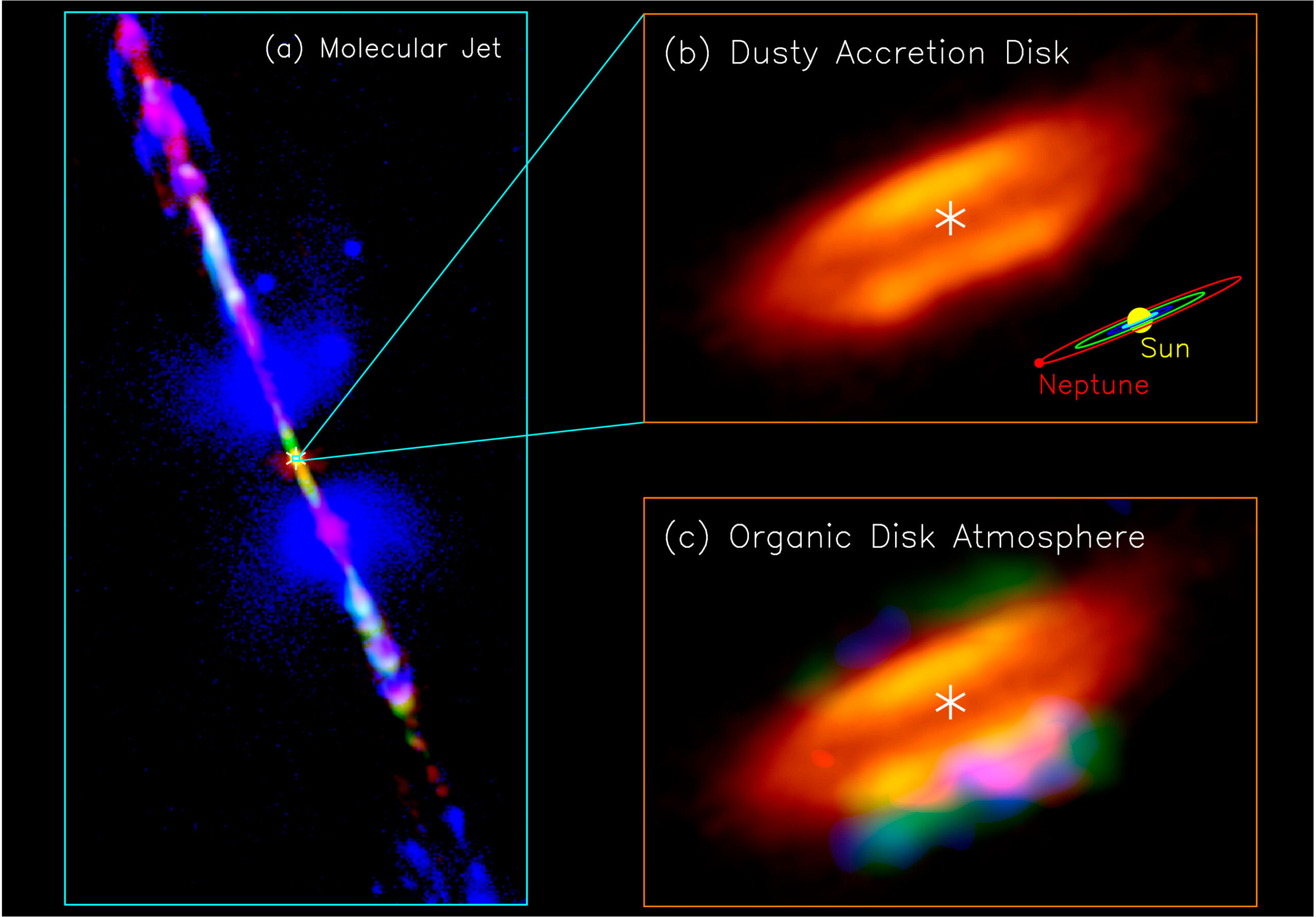
Stars like our Sun are continuously forming throughout our home galaxy, the Milky Way. The Atacama Large Millimeter/submillimeter Array (ALMA), located in the Atacama Desert of northern Chile, is currently the most powerful radio interferometric array on Earth. It offers unprecedented sensitivity and resolution, enabling us to observe star-forming regions in remarkable detail. In this talk, I will present our ALMA observations that reveal the early stages of star formation with exceptional clarity. In particular, I will report our findings on accretion disks and jets around forming stars and discuss their underlying formation mechanisms. These accretion disks are expected to evolve into protoplanetary disks, where planets eventually form. I will also present the detection of complex organic molecules—including prebiotic ones—in one of the accretion disks, and discuss their stratified distribution. These molecules may be inherited by protoplanetary disks and ultimately incorporated into the planets that form later.
Biography
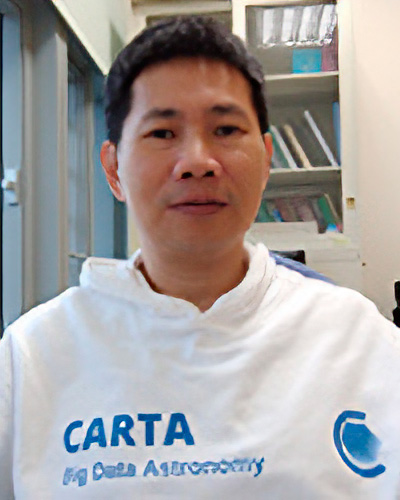
Chin-Fei Lee is a Distinguished Research Fellow and Deputy Director of the Academia Sinica Institute of Astronomy and Astrophysics (ASIAA) in Taiwan. He received his Ph.D. in Astronomy from the University of Maryland, College Park, in 2001, and began his research career as a postdoctoral fellow at NASA’s Jet Propulsion Laboratory, followed by further postdoctoral work on the Submillimeter Array Project at the Harvard-Smithsonian Center for Astrophysics. He then joined ASIAA as an Assistant Research Fellow and was later promoted to Distinguished Research Fellow. Dr. Lee has made important contributions to the field of star formation. His high-resolution observations of protostellar jets and disks have led to major advances in our understanding of how stars form from collapsing clouds of gas and dust.