
SEMINAR 2025
Information-theoretic tools for quantum cryptography
| Speaker | Ernest Y.-Z. Tan, University of Waterloo, Canada |
| Date/Time | Wednesday, 23 Jul, 9.30am |
| Zoom registration Link | https://nus-sg.zoom.us/webinar/register/WN_g40vnQhKRMKw4uYhHKHOXQ |
| Host | Prof Wang Jian-Sheng |
Abstract
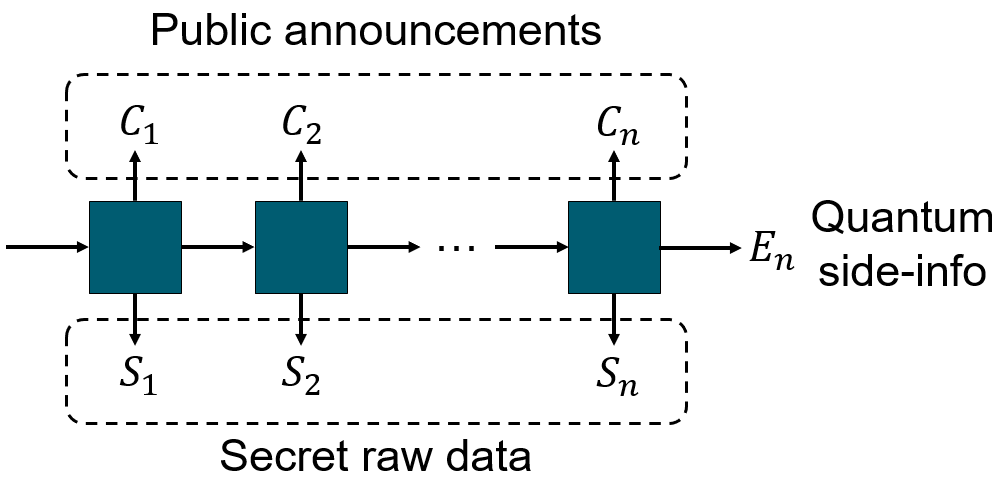
Quantum cryptography is a prominent candidate for potential applications of quantum technology. With recent developments in quantum information theory, a broad-ranging security proof framework has emerged that significantly improves the performance of a wide variety of cryptographic protocols, such as quantum key distribution and many different forms of quantum randomness generation. These results also encompass the “device-independent” paradigm, which uses Bell inequality violation to certify security even when the users’ devices are only minimally trusted. The theoretical methods underlying this framework arise from progress in characterizing multiple properties of quantum Rényi entropies, ranging from duality relations to how they “accumulate” across the rounds of a protocol. These methods serve to demonstrate rich connections between “abstract” information theory and experimental quantum cryptography, with questions in each field motivating or resolving questions in the other. In this talk, I present an overview of these developments from recent years, and explain the prospects they offer for quantum cryptography. I will then describe some open questions that remain to be resolved in this area, and outline future directions to explore for concurrent development of quantum cryptography and quantum information theory.
Biography
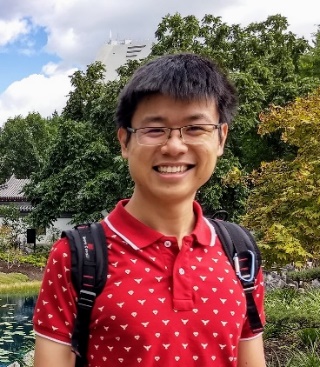
Ernest Tan studied physics at NUS for his undergraduate degree, followed by a Master’s under the supervision of Valerio Scarani. He completed a PhD in device-independent cryptography in 2021 at ETH Zürich with Renato Renner, then joined the Norbert Lütkenhaus group at the Institute for Quantum Computing in Waterloo for postdoctoral research in quantum key distribution. His research interests include quantum cryptography, quantum nonlocality, and information theory.