
COLLOQUIUM 2026
Nucleic Acid Biodesign and Biologics
| Speaker | Professor Hao Yan, Biodesign Institute, Arizona State University, USA |
| Date/Time | Wednesday, 3 Jun, 3pm |
| Location | LT27 |
| Host | A/Prof Wang Zhisong |
Abstract
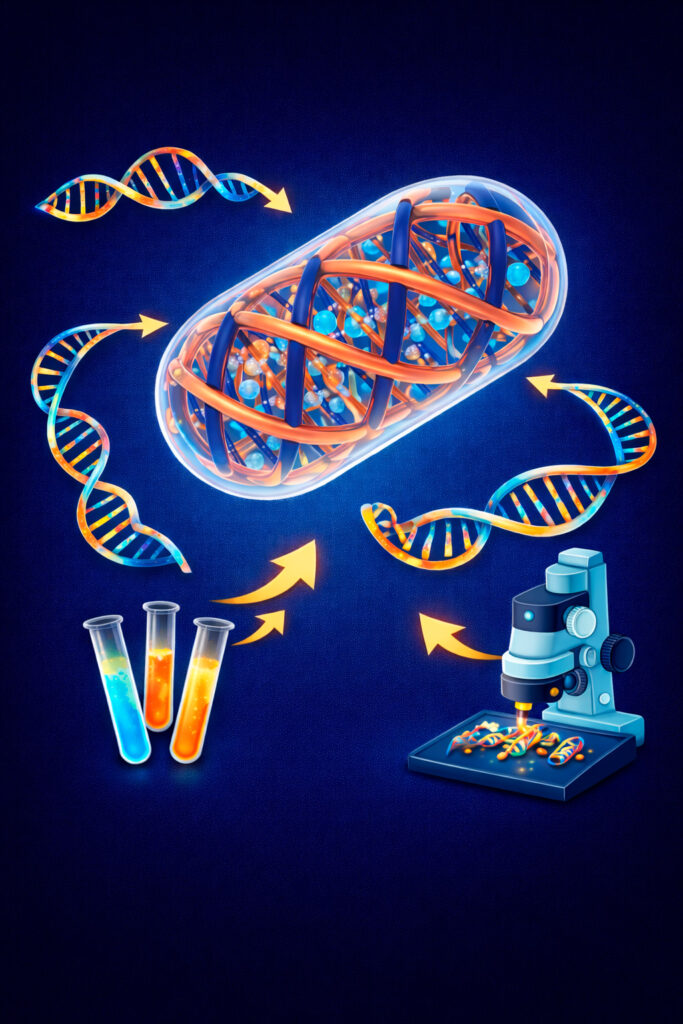
Programming matter at the molecular scale is a transformative frontier in science and engineering. Our research advances a vision to create programmable, bioinspired molecular systems that expand capabilities in medicine, materials science, and nanotechnology. Using nucleic acids as programmable building blocks, my laboratory engineers DNA- and RNA-based nanostructures that mimic and extend biological function for applications in adaptive materials and precision therapeutics. We define a new paradigm built on four core capabilities – Structure, Sense, Actuate, and Compute – to enable intelligent nanosystems capable of autonomous, context-dependent responses. This approach underpins programmable materials that adapt to environmental cues and programmable medicine in which therapeutic activity is dynamically regulated in real time. Guided by four interconnected pillars – Design, Assembly, Functionalization, and Interface – our work creates program molecular systems with broad translational potential.
Biography
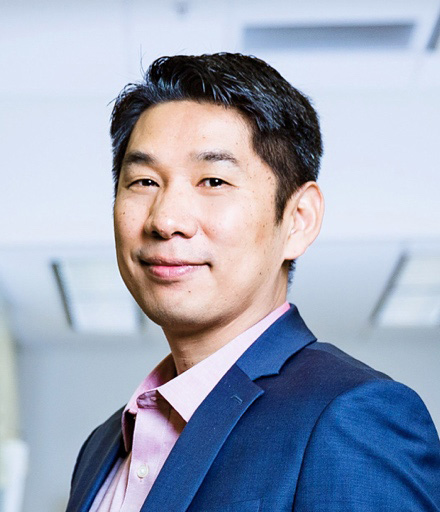
Hao Yan is the Regents Professor and Milton D. Glick Distinguished Professor of Chemistry and Biochemistry at Arizona State University, and Director of the Center for Molecular Design and Biomimetics in the Biodesign Institute. His honors include elected Fellow of AAAS, NAI, AIMBE, EASA, EurASc, as well as the Feynman Prize in Nanotechnology, Humboldt Research Award, Rozenberg Tulip Award in DNA Computing, and Sloan Fellowship etc. He serves as Associate Editor for Science Advances and ACS Applied Bio Materials. A pioneer of structural DNA nanotechnology, he has helped establish it as a chemical and engineering discipline. As former President of the International Society for Nanoscale Science, Computation and Engineering and currently General Chair of the Annual FNANO conference, he has played a central role in shaping the global biomolecular nanoscience community.
Graduate Seminar 1: From DNA as Code to DNA as Construction: The Evolution and Future of Structural DNA Nanotechnology | |
| Speaker | Professor Hao Yan, Biodesign Institute, Arizona State University, USA |
| Date/Time | Tuesday, 2 Jun, 10am |
| Location | LT27 |
| Moderator | A/Prof Wang Zhisong |
Graduate Seminar 2: Designing at the Nanoscale: Tools, Principles, and Programming Strategies in Structural DNA Nanotechnology | |
| Speaker | Professor Hao Yan, Biodesign Institute, Arizona State University, USA |
| Date/Time | Thursday, 4 Jun, 10am |
| Location | LT27 |
| Moderator | A/Prof Wang Zhisong |