
COLLOQUIUM 2025
Ultrafast magnetic coherent X-ray diffraction for imaging domain dynamics
| Speaker | Prof Ian Robinson, London Centre for Nanotechnology, University College, London |
| Date/Time | Friday, 27 Jun, 3PM |
| Location | Conference room S11-02-07 |
| Host | A/Prof Duane Loh |
Abstract
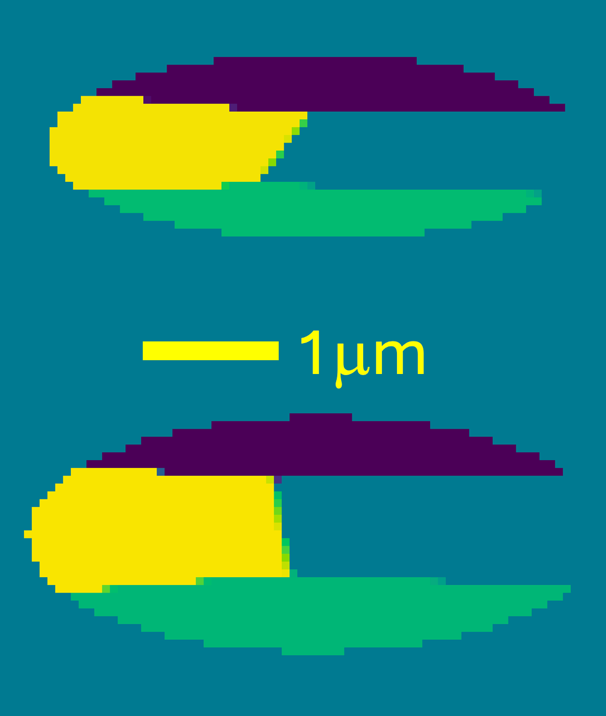
I will introduce the Bragg Coherent Diffraction Imaging (BCDI) method and describe its applications to imaging strain in crystalline materials. An extension of the method allows it to see crystalline domains and domain walls in micron-sized samples. In the latest work, we investigated how the long-range antiferromagnetic (AFM) state of Sr2IrO4 organizes itself in space and time following its electronic demagnetization driven by an ultrafast laser. We showed by ultrafast pump-probe resonant coherent X-ray imaging that domains shrink and regrow in the same location every time. Ultrafast magnetic BCDI experiment were performed at the MID instrument of the European X-ray Free Electron Laser (XFEL) facility [1]. The 106 magnetic reflection of a high-quality single crystal sample of Sr2IrO4 was aligned at 100 K and 11.215 keV, just below the Ir L3 absorption edge, using XFEL self-seeding. Real space images, obtained by inversion of the BCDI diffraction patterns, revealed an array of antiphase domains, a few microns in size, which shrank and grew again in response to a 50 fs laser pulse of 15 mJ/cm2.
[1] I. K. Robinson, D. Yang, R. Harder, D. Sheyfer, L. Wu, J. Griffiths, E. Bozin, M. Dean, J. Liu, H. Zhao, G. Cao, A. Rodriguez-Fernandez, R. Shayduk and A. Madsen, in preparation.
Biography
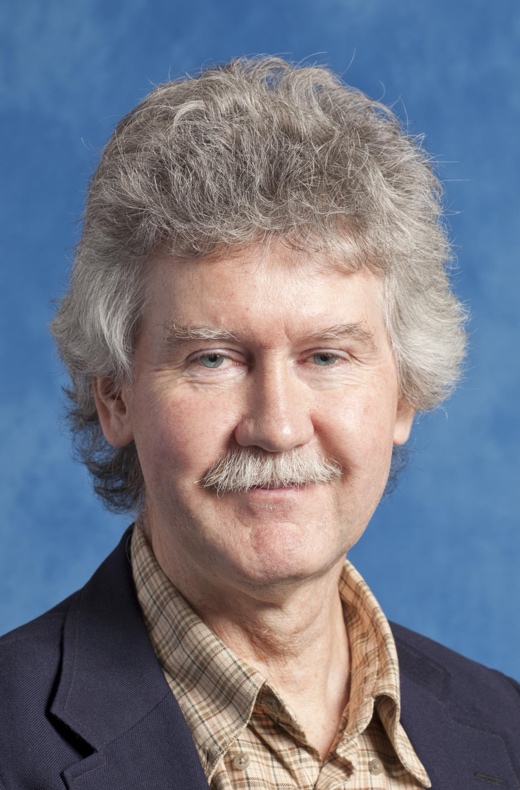
Ian Robinson is a professor at the London Centre for Nanotechnology. He uses X-ray diffraction to study the structure of materials. His research is currently focussed on the development of coherent X-ray diffraction methods for imaging the structure of nanoparticles and domain structures in larger crystals. The X-ray coherence leads to interference effects in the diffraction patterns which can be inverted, using phase retrieval methods, to 3D images. His research makes extensive use of synchrotron radiation facilities and Free-Electron Lasers. Historically, the earliest beamlines were used to discover Crystal Truncation Rods, opening the field of surface structure determination, for which Robinson was awarded the Surface Structure Prize in 2011, the Gregori Aminoff Prize in 2015 and the Arthur H. Compton Prize in 2025.