
My academic journey at NUS
Shawn Liew Hong Wei [MSc 2026]
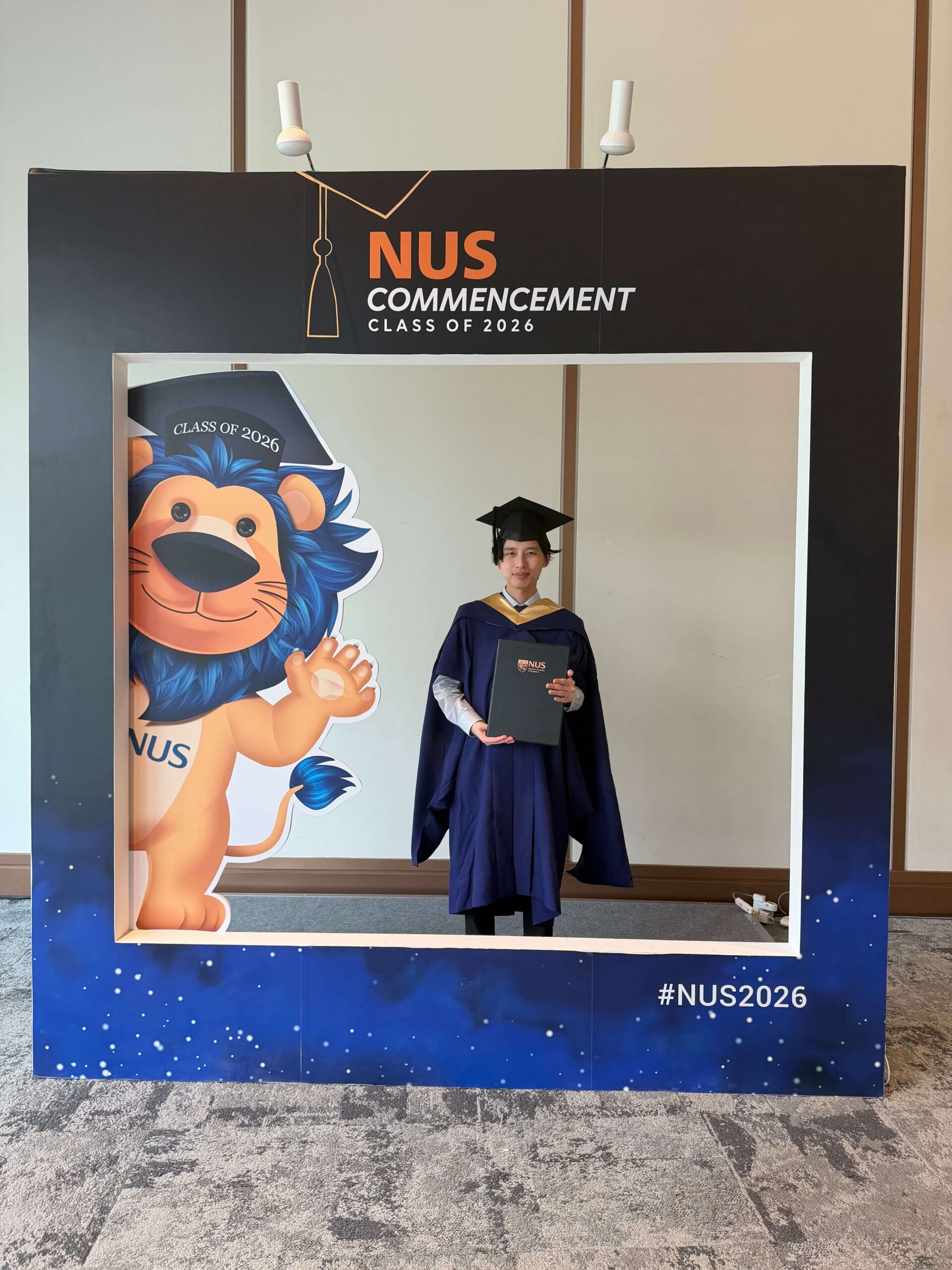
Once upon a time, I was a young student that had been offered a place in NUS after Junior College. I was pretty excited about starting university. As with many freshmen, my first journey into university began with an orientation camp, which for me was the Arts O’Week by the Faculty of Arts and Social Sciences.
[Back in 2019, before the creation of the College of Humanities and Sciences (CHS), the Faculty of Science (FoS) and Faculty of Arts and Social Sciences (FASS) were two distinct faculties and admitted students separately.]
I had begun my university life in FASS despite having the full intention of wanting to major in Physics. But I was unable to do so as I did not meet the Faculty of Science’s subject prerequisites. I had only intended to do Physics in university after participating in the Singapore Young Physicists’ Tournament in Junior College, one year after selecting my subject combination. By then, it was too late to change the subjects that I took.
In spite of the situation, I was persistent that I would take four physics courses in my first semester. With the enormous support of Prof Sow Chorng Haur, and after having done reasonably well in my first semester, I was fortunate enough to be transferred to the Faculty of Science as a physics major.
During my research, I learnt of the many advances in quantum technologies, especially in quantum computing, over the last few decades. I became increasingly convinced that a fault-tolerant quantum computer would arrive in the near future and would bring significant benefits to humanity in many different domains like chemistry and finance.
Shawn Liew Hong Wei
Having been accepted to the Faculty of Science, I was invited to apply for the French Double Degree Programme (FDDP). This was a concurrent programme that awarded three degrees and would enable me to study in Paris for two years. I had been keen on this programme even before university and was very happy when I was offered the chance to do so.
For the next three semesters, it was difficult to manage the extra workload and especially amidst the pandemic. Nevertheless, I was still able to see my friends whenever there were classes in person, and I enjoyed the many conversations that we had over lunch and even dinner.
My next two years in a French engineering school (ENSTA Paris) were particularly challenging. The classes were rigorous, the lessons were fast-paced, and all in a new language for me. Nonetheless, I found my time to be very enjoyable as it was an especially enriching experience for me. For my second year in France, I selected Computer Science as my specialisation—which would prove useful when I returned to Singapore to complete my studies.
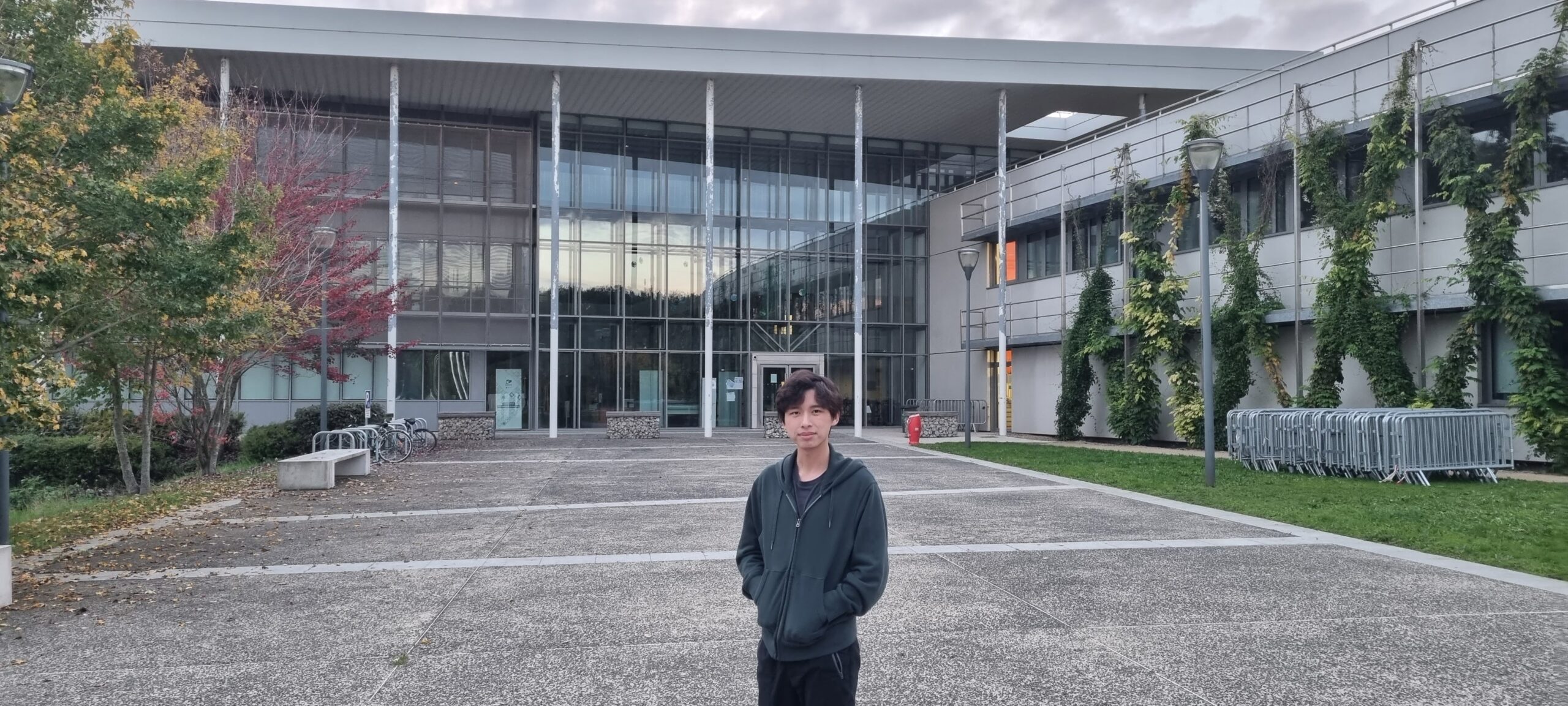
Upon returning to NUS Physics for the fifth year of my studies, I had to complete my Final Year Project and my Master’s thesis. For my Final Year Project, I worked on Quantum Convolutional Neural Networks and managed to improve its learning performance. For my Master’s thesis, I worked on quantum non-local games to demonstrate that cooperative players sharing an entangled quantum state can outperform any strategy that uses only classical non-communicating resources.
During my research, I learnt of the many advances in quantum technologies, especially in quantum computing, over the last few decades. I became increasingly convinced that a fault-tolerant quantum computer would arrive in the near future and would bring significant benefits to humanity in many different domains like chemistry and finance. Presently, many open questions still remain before we can get there. I wanted to work on this exciting field and therefore decided to embark on a PhD programme in quantum algorithms.
Today, I am a PhD student working on quantum algorithms in the Centre for Quantum Technologies in NUS.