SEMINAR 2026
Observations of LIGO-Virgo-KAGRA’s Black Holes and Neutron Stars as Astrophysical Probes
| Speaker | Mr Utkarsh Mali, University of Toronto, Canadian Institute for Theoretical Astrophysics, Canada |
| Date/Time | Wednesday, 26 Aug, 3pm |
| Location | S11-02-07 Conference Room |
| Host | Asst/Prof Alvin Chua |
Abstract
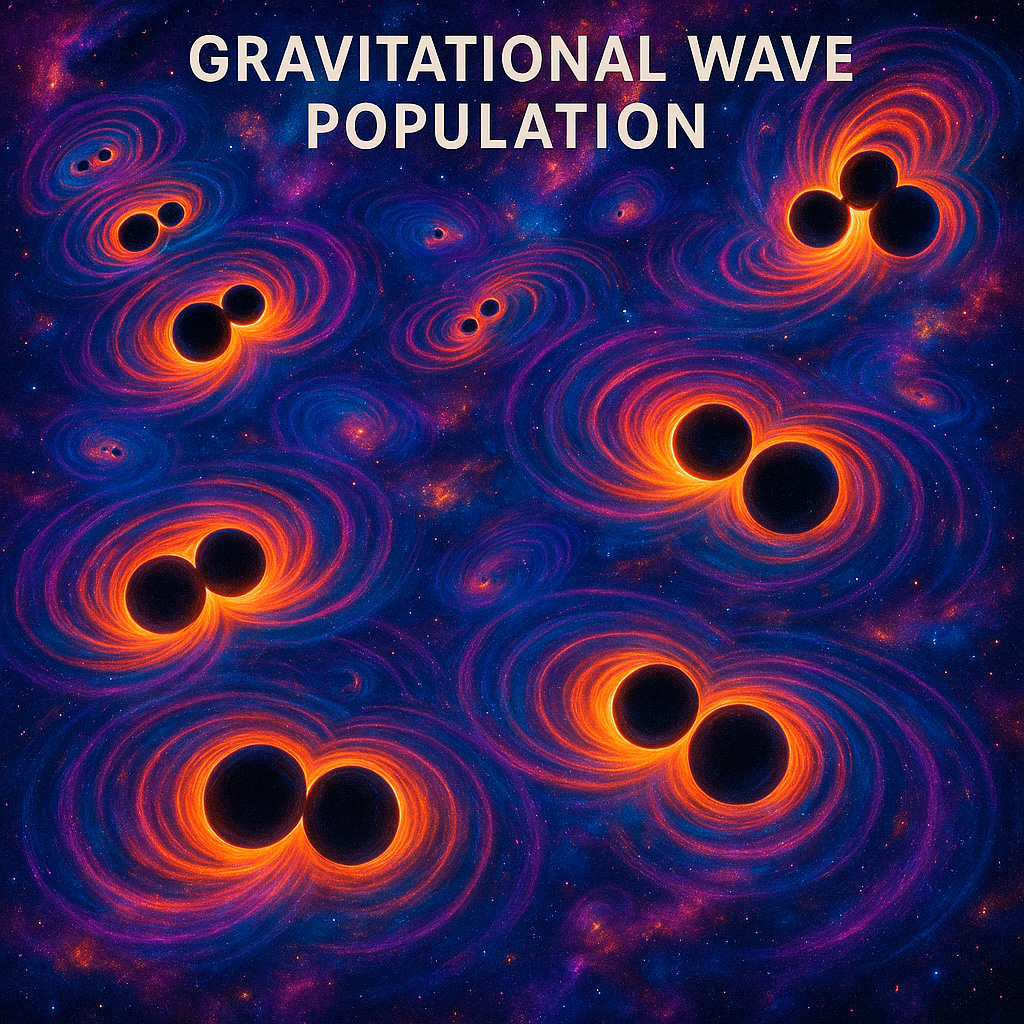
In the ten years since the first gravitational wave detection, the LIGO, Virgo, and KAGRA detectors have observed over 200 compact binary mergers, revealing a previously unobserved population of binary neutron stars and black holes. Features in their masses, spins, and distances contain information about how they form and evolve across cosmic time, and the universe through which their gravitational waves propagate. In this talk, I will present recent insights into the compact object population inferred from gravitational waves and discuss how these measurements can be used to understand compact object formation, measure cosmological parameters, and interpret unusual individual events. I will highlight the role of population statistics in connecting the detected catalog to an astrophysical population. I will then discuss open questions that a growing catalog will allow us to address. Whether you’re interested in black holes or the novel statistical tools used to understand them, this talk offers a window into how we are listening to the universe in an entirely new way.
Biography
Utkarsh Mali is a gravitational wave astrophysicist whose research lies at the intersection of gravitational wave astronomy and statistical inference. He develops and applies hierarchical Bayesian methods to populations of gravitational wave sources, with the goal of extracting robust insights about the Universe from noisy, incomplete data. He is currently a PhD candidate in Physics at the University of Toronto and the Canadian Institute for Theoretical Astrophysics, working under the supervision of Reed Essick.