SEMINAR 2026
Urban Warming Driven by Anthropogenic Heat Flux
| Speaker | A/Prof Dan Li, Boston University, USA |
| Date/Time | Monday, 30 Mar, 2pm |
| Location | S11-02-07 Conference Room |
| Host | Visiting Prof Yi Ming |
Abstract
Anthropogenic heat flux is a defining feature of urban climates, yet its warming effect on the urban atmosphere cannot be quantified using observations alone. As a result, quantification of its warming effect has relied almost entirely on numerical modeling. Most previous modeling studies have taken an applied, case-specific approach, prescribing anthropogenic heat fluxes for particular cities or periods and reporting the resulting urban temperature responses, without establishing a coherent theoretical framework. This talk reframes the problem by focusing on the sensitivity of urban air temperature to anthropogenic heat flux, rather than on case-dependent temperature changes. Emphasis is placed on the physical processes governing this sensitivity and on how those processes are represented in numerical models. After defining this sensitivity and reviewing the range of values reported in the literature, I examine three key dimensions: (1) its spatial and temporal variability, (2) structural uncertainties in mesoscale models that influence it, and (3) the emergence of nonlinearity under strong heating. Together, these elements provide a unified, process-based framework for understanding the anthropogenic heating of the urban atmosphere.
Biography
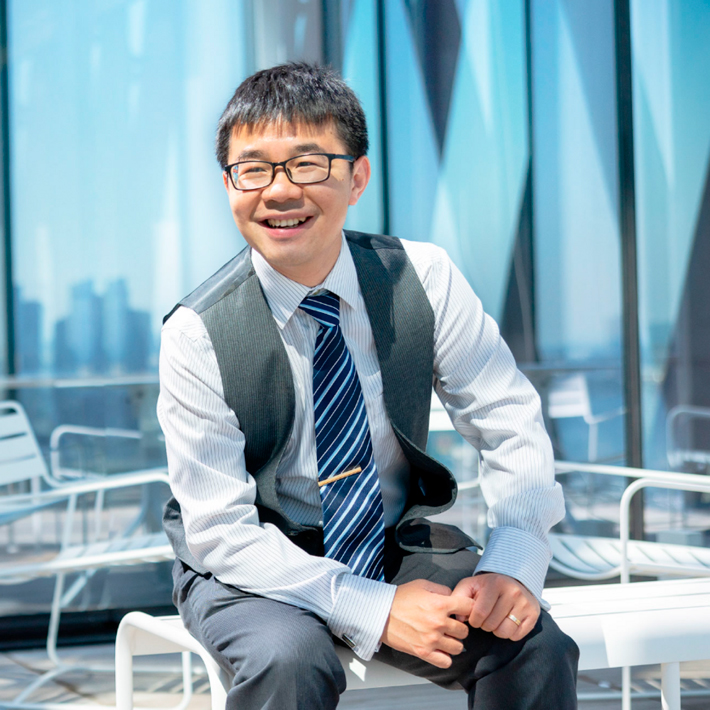
Dr. Dan Li is an Associate Professor in the Department of Earth and Environment and Department of Mechanical Engineering at Boston University (BU). He is also an Associate Director of the Initiative on Cities at BU. He completed his Ph.D. in 2013 in the Department of Civil and Environmental Engineering at Princeton University. His research focuses on improving the understanding of the dynamics and thermodynamics of the atmospheric boundary layer and applying the knowledge to addressing real world sustainability challenges. He currently serves as an editor of the Journal of Atmospheric Sciences. He is also the recipient of the Timothy Oke Award from International Association for Urban Climate, the Global Environmental Change Early Career Award from American Geophysical Union, and the Henry Houghton Award from American Meteorological Society.
Co-sponsor: