SEMINAR 2026
How LLMs Learn to Reason — And Its Application in Constructing an Interdisciplinary Encyclopedia
| Speaker | A/Prof Kun Chen, Institute of Theoretical Physics, Chinese Academy of Sciences, China |
| Date/Time | Thursday, 5 Feb, 2pm |
| Location | S11-02-07 Conference Room |
| Host | Asst/Prof Zhang Yang |
Abstract
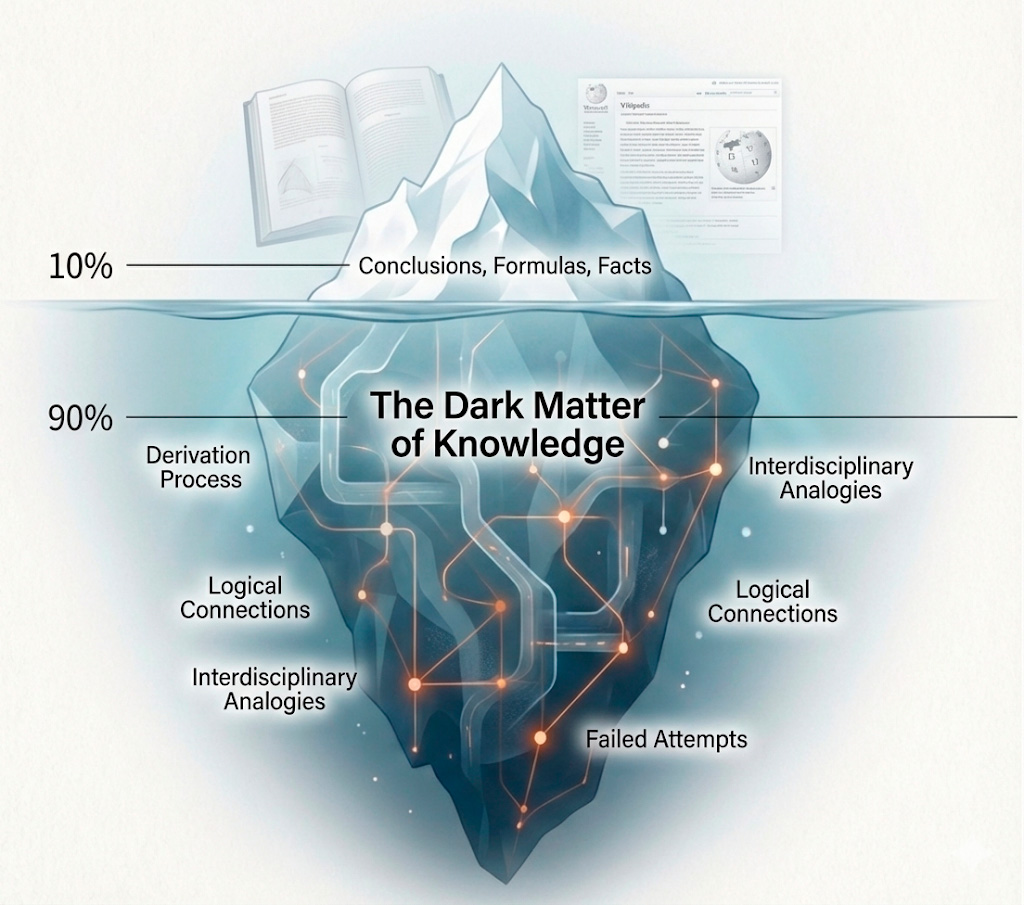
Conventional knowledge repositories typically record final results rather than the underlying derivation steps. This omission hinders verification and leads to the loss of interdisciplinary context. As Large Language Models (LLMs) are trained primarily on such “compressed” corpora, the origin of their emergent “long-chain reasoning” capabilities has become a central research question.
This presentation investigates how Reinforcement Learning with Verifiable Rewards (RLVR) facilitates the transition of models from “System 1” intuitive associations to emergent, “System 2”-like general reasoning capabilities. We propose that RLVR induces a sparse, quasi-tree-like “concept network” within the semantic space. This framework explains phenomena such as the evolution of reasoning chains, phase transitions in learning, and catastrophic forgetting during Supervised Fine-Tuning (SFT), offering a statistical physics perspective on how LLMs acquire complex reasoning skills.
Building upon this framework, we demonstrate how to leverage long Chain-of-Thought (CoT) to “decompress” human scientific knowledge, constructing a verifiable reasoning repository spanning multiple disciplines including mathematics, physics, and biology. Furthermore, we implement reverse knowledge retrieval and knowledge synthesis to establish SciencePedia, a scientific encyclopedia system comprising approximately 200,000 entries. This system exhibits a low hallucination rate and robust interdisciplinary capabilities.
Biography
Dr. Kun Chen is an Associate Professor at the Institute of Theoretical Physics, Chinese Academy of Sciences. His research centers on the emergence of logical reasoning capabilities in large language models (LLMs) and the exploration of new paradigms for Artificial General Intelligence (AGI) in foundational science.
Dr. Chen holds a Bachelor’s degree from the University of Science and Technology of China (USTC). He earned a Ph.D. in Condensed Matter Physics from the University of Massachusetts and a Ph.D. in Quantum Information from the Hefei National Laboratory for Physical Sciences at the Microscale. Subsequently, he conducted postdoctoral research at Rutgers University and the Flatiron Institute, with support from the Simons Foundation.
He currently serves as the Chief Scientist of the SciencePedia project.