
COLLOQUIUM 2025
Towards a Quantum Leap in Computational High-Energy Physics
| Speaker | Stefano Carrazza, University of Milan and INFN Milan, Italy |
| Date/Time | Wednesday, 29 Oct, 3pm |
| Location | S11-02-07 |
| Host | Prof Gong Jiangbin |
Abstract
This talk explores the evolving landscape of computational technology in High-Energy Physics (HEP), tracing the journey from established methods to novel quantum solutions. We begin with a brief overview of research topics utilizing classical CPUs and GPUs, including techniques like traditional AI, Monte Carlo event generators, and integration algorithms.
The core of the presentation transitions to novel quantum technologies, focusing specifically on quantum computing for challenging HEP applications, such as calculating Parton Distribution Functions and enhancing event generation. We will focus on the software front by introducing Qibo, the open-source quantum computing framework co-developed in Singapore. We will showcase new results demonstrating its application in Quantum Machine Learning (QML), highlighting its potential to accelerate complex tasks in HEP.
We conclude by summarizing the current status and outlining the compelling research opportunities for quantum applications being explored within the Centre for Quantum Technologies (CQT).
Biography
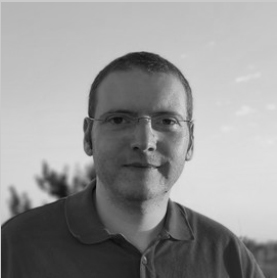
Prof. Stefano Carrazza, a theoretical and computational physicist, is an Associate Professor at the University of Milan and Associate Researcher at the INFN Milan. He graduated from the École Normale Supérieure de Lyon and was awarded the INFN Sergio Fubini Prize in Theoretical Physics in 2017. His career progression includes a Senior Research Fellowship at CERN (2015–2018), a tenure-track Senior Researcher position at University of Milan (2018–2021) and a Scientific Association at CERN (2024). His expertise lies in computational models and methods applied to science. His extensive research portfolio spans theoretical and experimental physics, with work in areas like data analysis and AI tools for heavy-ion physics (ALICE at CERN), theoretical physics, and quantum computing collaborations with institutions like CERN, CQT (NUS), IHPC (A*STAR) and TII (UAE).