
COLLOQUIUM 2025
New Quasiparticles Revealed by Quantum Interference and Light Scattering
| Speaker | Kenneth Stephen Burch, Boston College, USA |
| Date/Time | Wednesday, 16 Jul, 3pm |
| Location | S11-02-07 |
| Host | A/Prof Goki Eda |
Abstract
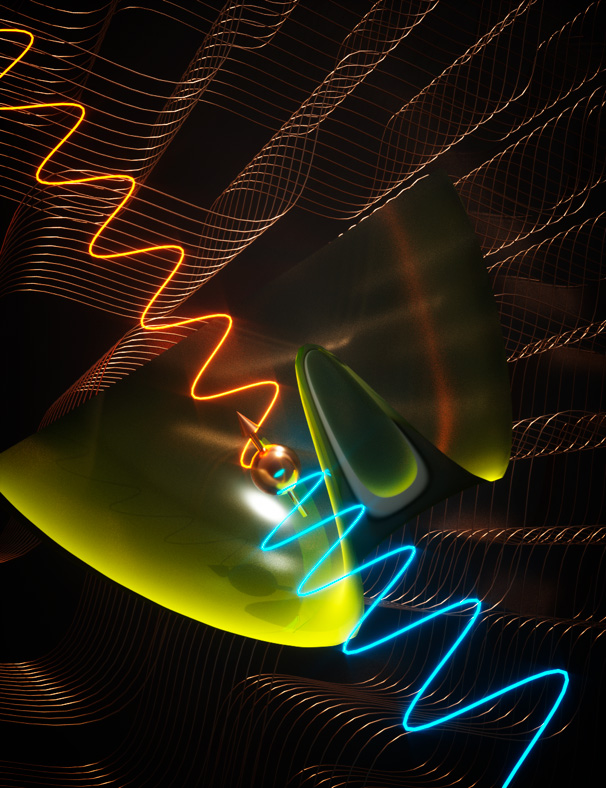
In materials, new quasi-particles can emerge as collective excitations of ordered states. Detecting these modes and their associated properties is an essential step to understanding these new phases. Here, I will discuss the utility of Raman Spectroscopy in detecting the various excitations that emerge in quantum materials. I will focus on our discovery of an Axial Higgs mode emerging from a Charge Density Wave (CDW) in the 2D Material family RTe3. For decades, the CDW in RTe3 was thought to be conventional. However, using quantum interference and various optical techniques, we have proved that a hidden Ferroaxial order emerges from a combined orbital and charge order. Time permitting, I will also briefly discuss our recent discovery of another quasi-particle, the chiral Majorana edge mode, via its non-local transport response.
Biography
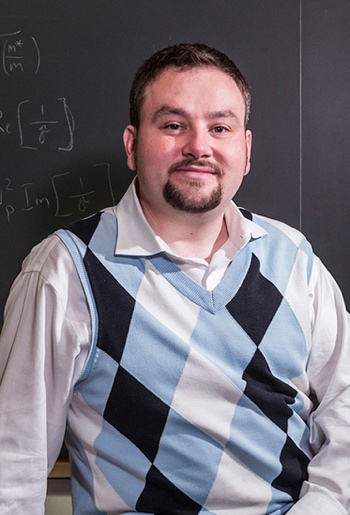
Kenneth Burch has been a Professor of Physics at Boston College since 2014, running the Laboratory for Assembly and Spectroscopy of Emergence (LASE), and in 2024, became the chair of the physics department. Before arriving at BC, he was an assistant professor at the U. of Toronto for five years. He is a former Director’s fellow at Los Alamos National Laboratory, where he performed ultrafast spectroscopy and, as a graduate student of D. Basov, studied the optical properties of magnetic materials at UCSD. He has made seminal contributions to the development of novel techniques for understanding and exploiting quantum materials. This includes discovering the Axial Higgs Mode in a Charge Density Wave, the colossal bulk photovoltaic effect in a Weyl semimetal, modulation doping in 2D materials, fractional spin excitations in a potential Kitaev spin liquid, and developing cutting-edge biosensors based on graphene. His group also developed a cleanroom in a glovebox where all fabrication and heterostructure preparation is performed. He was named an APS fellow for his work, received the Lee-Asheroff-Richardson Prize, and the APS GMAG best dissertation award.