
SEMINAR 2025
Excitons in Flatland: Massless Composite Particles, Nonlinear Optics, and Data-Driven Calculations
| Speaker | Diana Y. Qiu, Yale University, New Haven, USA |
| Date/Time | Friday, 27 Jun, 1:30pm |
| Location | S11-02-07 |
| Host | A/Prof Quek Su Ying |
Abstract
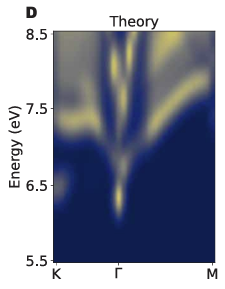
The absorption of light by matter follows a universal mechanism that drives crucial reactions in both natural and engineered systems. Processes ranging from photosynthesis, to photocatalysis, to energy harvesting in photovoltaic cells all begin in the same way: the absorption of light creates an exciton—a correlated electron-hole pair that carries energy rather than charge. Exciton dynamics determine the effectiveness of photovoltaic energy harvesting and photosynthesis, while excitonic manipulation enables the optical preparation and transduction of quantum states and the potential to integrate the fast speed of photons into electronics. However, the quantitative prediction of these exciton dynamics is a complicated problem that requires accurate quantum mechanical descriptions of many-electron interactions. In this talk, I will discuss three different frontiers related to the first principles understanding of exciton dynamics and nonlinear optics in two-dimensional materials: the observation of massless excitons and their consequences for energy transport, exciton effects in nonlinear optics in the nonperturbative regime, and machine learning based acceleration of first principles calculations of these effects.

Biography
Diana Qiu is an assistant professor of Materials Science, Physics, and Applied Physics at Yale University. She received her Ph.D. from UC Berkeley in 2017, followed by a postdoc in the Materials Science Division at Lawrence Berkeley National Lab. Her research interests focus on the development and application of ab initio methods to predict the excited-state properties of novel quantum materials, most notably excitons in 2D materials. Her work is supported by a Packard Fellowship, a DOE Early Career Award, a NSF Career award, and a Presidential Early Career Award for Scientists and Engineers.