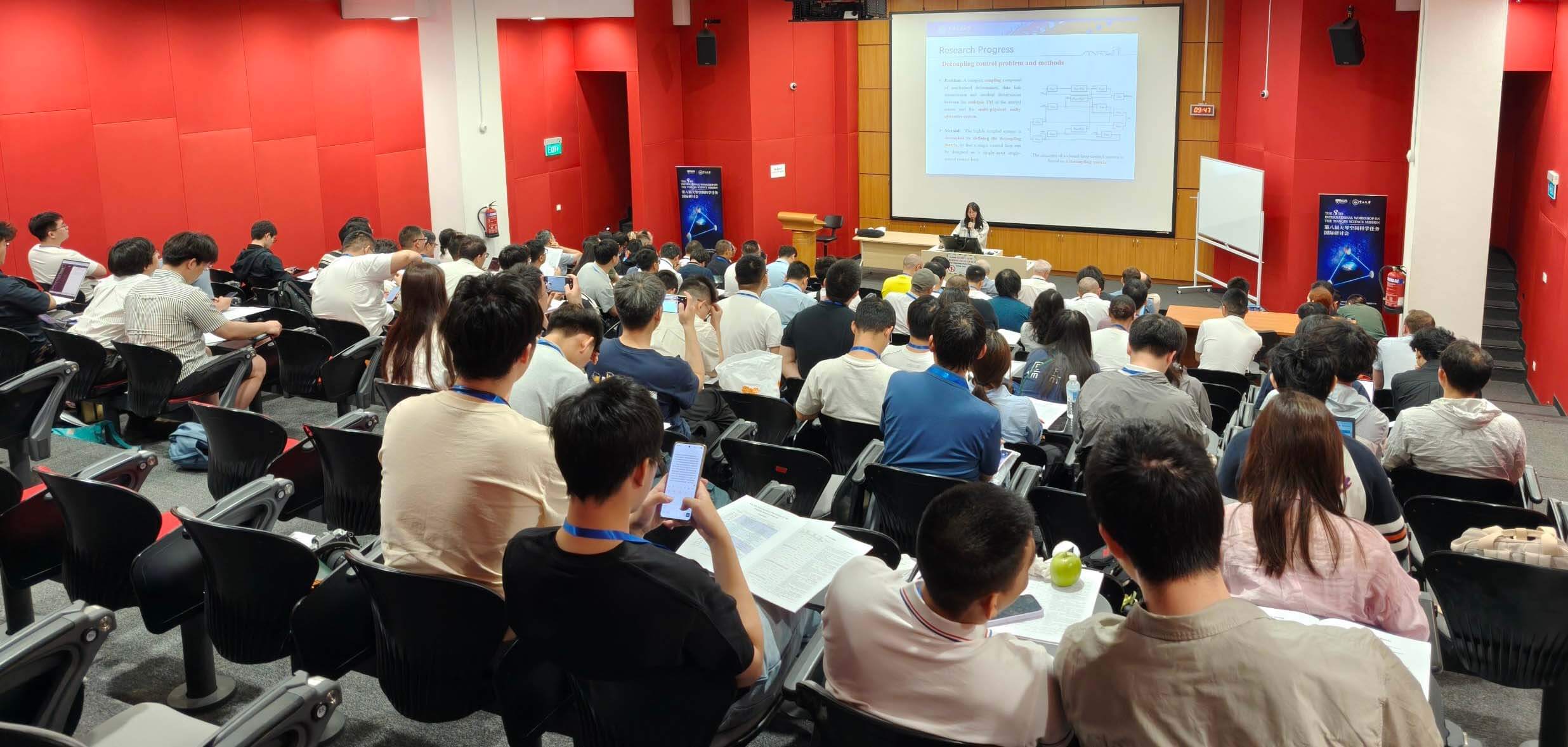
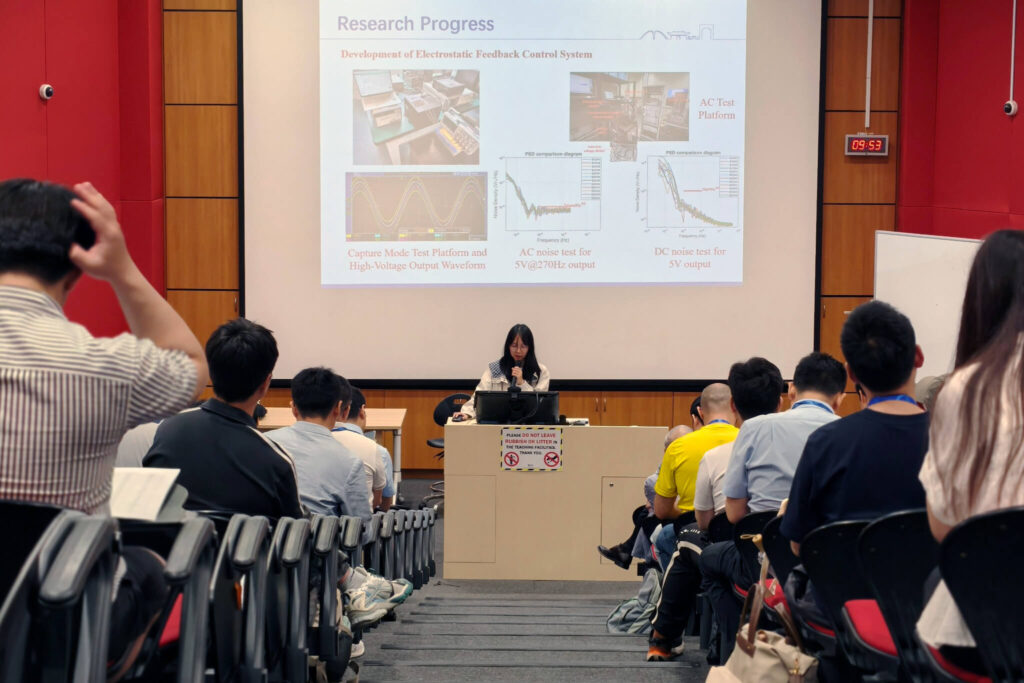
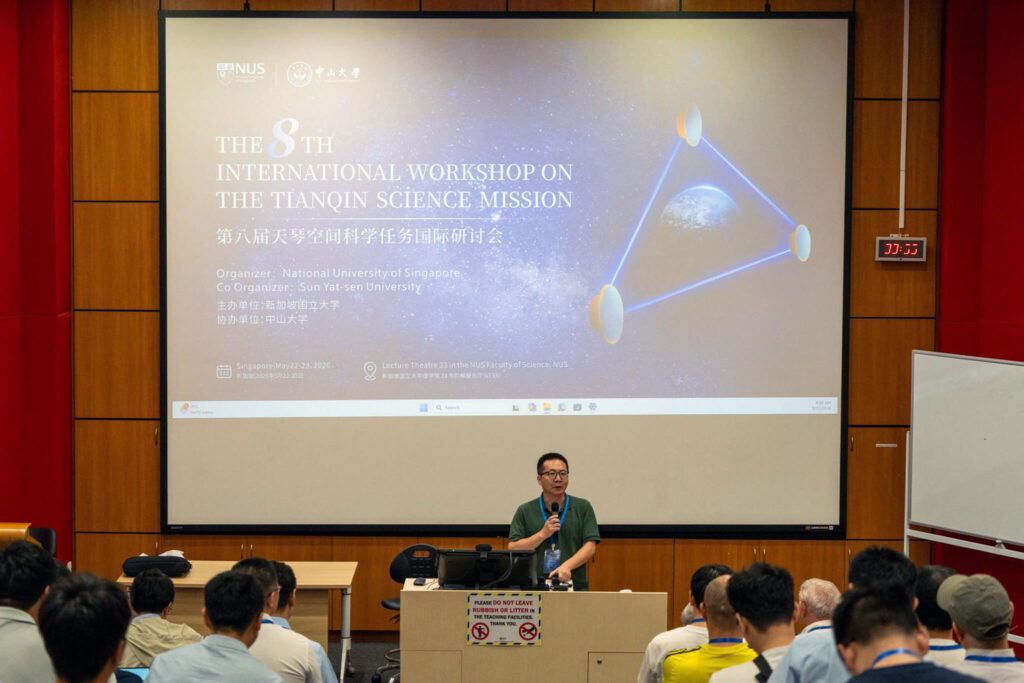
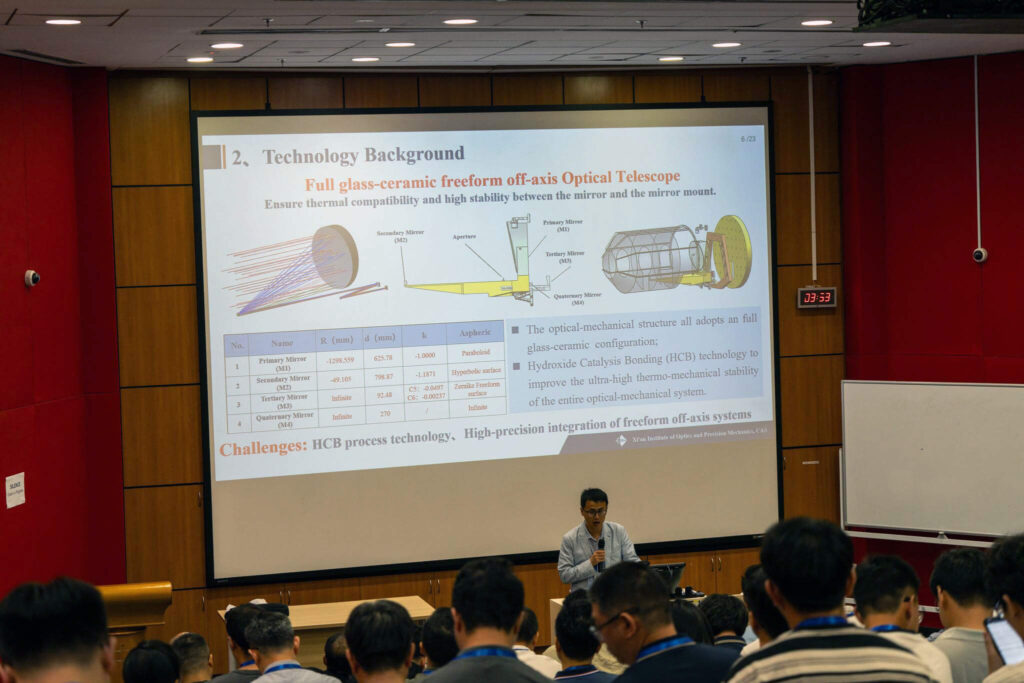
8th International Workshop on the TianQin Science Mission, 22–23 May
The 8th International Workshop on the TianQin Science Mission took place recently at the National University of Singapore. Co-organised by NUS Physics this year, it is part of a series that was initiated by Sun Yat-sen University in 2014.
The workshops aim to provide a platform to share about the TianQin project and all related fields such as gravitational wave science, data analysis, multi-messenger astronomy, other current and future gravitational wave experiments, and recent observational results.
In his welcome speech at the workshop, head of NUS Physics, Prof Gong Jiangbin, noted that the first workshop was held one year before the LIGO* observation of the gravitational waves. Given that we can now ‘hear’ the universe through gravitational waves which offers a brand-new sense for humanity, we must explore different frequency ranges beyond LIGO’s capabilities, not just for scientific curiosity to map out the entire universe, but also for the long-term survival of human civilisation.
*The Laser Interferometer Gravitational-Wave Observatory (LIGO) is a large-scale physics experiment and observatory designed to detect cosmic gravitational waves.
To achieve the Tianqin science mission, we must continue to break the boundaries of what is technologically possible today. Ground-based detectors like LIGO have utilised quantum entanglement between squeezed light and the mechanical oscillations of big mirrors to surpass the standard quantum limit in sensing. This allowed us to observe more black holes than ever before. By working together, many top scientists here today will likewise move towards the most extraordinary science and engineering in space.